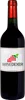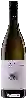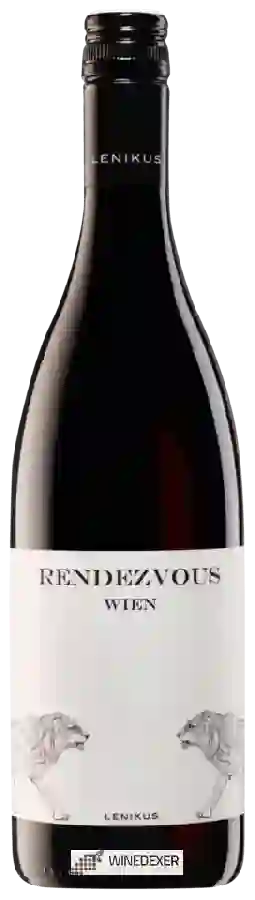
Winery LenikusRendezvous
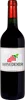
 Red wine



This wine is a blend of 2 varietals which are the Cabernet-Sauvignon and the Zweigelt.
This wine generally goes well with blue cheese, pork or poultry.

Food and wine pairings with Rendezvous
Pairings that work perfectly with Rendezvous



Original food and wine pairings with Rendezvous



The Rendezvous of Winery Lenikus matches generally quite well with dishes of beef, lamb or pork such as recipes of braised beef with guinness, lamb mice confit and melting carrots or new york hot dog.
Details and technical informations about Winery Lenikus's Rendezvous.
Discover the grape variety: Cabernet-Sauvignon
Structured, tannic reds, deeply coloured, with aromas of blackcurrant, blackberry, cedar, tobacco and graphite, underpinned by firm acidity and fine ageing potential. Cornerstone of the great Médoc estates (Pauillac, Saint-Estèphe, Saint-Julien) and signature of Napa Valley, Coonawarra and Maipo. The world's most planted red variety, a natural cross of Cabernet Franc x Sauvignon Blanc born in Bordeaux.
Last vintages of this wine
The best vintages of Rendezvous from Winery Lenikus are 0, 2015
Informations about the Winery Lenikus
The Winery Lenikus is one of of the world's great estates. It offers 9 wines for sale in the of Wien to come and discover on site or to buy online.

The wine region of Wien
Austrian capital and rare major city with an active vineyard (~580 ha), 85% whites. Unique signature tradition: Gemischter Satz DAC, blend of 2 to 20 white grapes co-planted and co-harvested — fresh, complex whites with signature notes of citrus, white apple, pear, white flowers, fresh herbs and a mineral touch, taut and gastronomic palate. Also peppery Grüner Veltliner, chiselled Riesling, ample Weißburgunder. Mythical Viennese Heurigen.
The wine region of Weinland
Vast German-speaking region in north-eastern Switzerland, the country's largest production area. Signature Pinot Noir (Blauburgunder): fine, fresh reds with notes of cherry, raspberry, undergrowth and sweet spices, silky tannins. Elegant, delicate style, often barrel-aged. Also light, floral Müller-Thurgau (Riesling-Sylvaner), lively, lemony native Räuschling, ample Pinot Gris.
The word of the wine: Performance
Quantity of grapes harvested per hectare. In AOC, the average yield is limited on the proposal of the appellation syndicate, validated by the Inao. The use of high-performance plant material (especially clones) and better control of vine diseases have increased yields. This is not without consequences on the quality of the wines (dilution) and on the state of the market (too much wine). We must not over-simplify: low yields are not synonymous with quality, and it is often in years with generous harvests that we find the greatest vintages (1982 and 1986 in Bordeaux, 1996 in Champagne, 1990 and 2005 in Burgundy...).