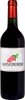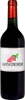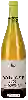
Winery Le Mas de l'EcritureÉmotion Occitane
 Red wine
This wine generally goes well with beef, veal or pasta.
Food and wine pairings with Émotion Occitane
Pairings that work perfectly with Émotion Occitane



Original food and wine pairings with Émotion Occitane
The Émotion Occitane of Winery Le Mas de l'Ecriture matches generally quite well with dishes of beef, pasta or veal such as recipes of thai beef skewers, salmon cannelloni or osso bucco milanese.
Details and technical informations about Winery Le Mas de l'Ecriture's Émotion Occitane.
Discover the grape variety: Dorona
An autochthonous Italian grape variety that was cultivated for a very long time, particularly in the Venice region, where it almost disappeared. It seems to be known only in this region and therefore completely unknown in all other wine-producing countries. According to recently published A.D.N. analyses, it is the result of a natural intraspecific cross between Garganega and Tuscan malvasia or malvasia del chianti, which explains why it has long been confused with its mother, Garganega.
Informations about the Winery Le Mas de l'Ecriture
The Winery Le Mas de l'Ecriture is one of of the world's greatest estates. It offers 8 wines for sale in the of Languedoc to come and discover on site or to buy online.

The wine region of Languedoc
Languedoc (formerly Coteaux du Languedoc) is a key appellation used in the Languedoc-Roussillon wine region of southern France. It covers Dry table wines of all three colors (red, white and rosé) from the entire region, but leaves Sweet and Sparkling wines to other more specialized appellations. About 75% of all Languedoc wines are red, with the remaining 25% split roughly down the middle between whites and rosés. The appellation covers most of the Languedoc region and almost a third of all the vineyards in France.
The wine region of Languedoc-Roussillon
Languedoc (formerly Coteaux du Languedoc) is a key appellation used in the Languedoc-Roussillon wine region of southern France. It covers Dry table wines of all three colors (red, white and rosé) from the entire region, but leaves Sweet and Sparkling wines to other more specialized appellations. About 75% of all Languedoc wines are red, with the remaining 25% split roughly down the middle between whites and rosés. The appellation covers most of the Languedoc region and almost a third of all the vineyards in France.
The word of the wine: Local wine
Table wine, but with the origin indicated. It corresponds to a particular legislation: the freedom to use grape varieties is greater than for the AOC, but the quality criteria such as the approval tastings can sometimes be more demanding. The legislation is still evolving, but for the moment there are three levels: regional (e.g. Vin de Pays d'Oc), departmental and local (e.g. Côtes de Thongue).