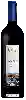
Le Clos de CélignyMerlot
 Red wine


In the mouth this red wine is a powerful with a nice balance between acidity and tannins.
This wine generally goes well with beef, veal or lamb.
Taste structure of the Merlot from the Le Clos de Céligny
Light | Bold | |
Smooth | Tannic | |
Dry | Sweet | |
Soft | Acidic |
In the mouth the Merlot of Le Clos de Céligny in the region of Genève is a powerful with a nice balance between acidity and tannins.
Food and wine pairings with Merlot
Pairings that work perfectly with Merlot



Original food and wine pairings with Merlot
The Merlot of Le Clos de Céligny matches generally quite well with dishes of beef, lamb or veal such as recipes of tournedos rossini with port sauce, saddle of lamb with herbs or orloff roast.
Details and technical informations about Le Clos de Céligny's Merlot.
Discover the grape variety: Merlot
Merlot noir is a grape variety that originated in France (Bordeaux). It produces a variety of grape specially used for wine making. It is rare to find this grape to eat on our tables. This variety of grape is characterized by small to medium sized bunches, and medium sized grapes. Merlot noir can be found in many vineyards: South West, Languedoc & Roussillon, Cognac, Bordeaux, Loire Valley, Armagnac, Burgundy, Jura, Champagne, Rhone Valley, Beaujolais, Provence & Corsica, Savoie & Bugey.
Last vintages of this wine
The best vintages of Merlot from Le Clos de Céligny are 0
Informations about the Le Clos de Céligny
The Le Clos de Céligny is one of of the world's greatest estates. It offers 11 wines for sale in the of Genève to come and discover on site or to buy online.

The wine region of Genève
Geneva, at the western end of Lac Léman (Lake Geneva), is the second-largest city in Switzerland and the country's third-largest wine producing canton after Valais and Vaud. Although not famously associated with wine, the city and its environs are home to numerous Vineyards and wineries, some within just a few miles of the Center. At 1,400 hectares (3,500 acres), Geneva accounts for 10 percent of the country's vineyard area. Gamay is the predominant variety here, with the Swiss workhorse Chasselas (often labelled "Fendant") and Pinot Noir taking second and third place respectively.
The word of the wine: Performance
Quantity of grapes harvested per hectare. In AOC, the average yield is limited on the proposal of the appellation syndicate, validated by the Inao. The use of high-performance plant material (especially clones) and better control of vine diseases have increased yields. This is not without consequences on the quality of the wines (dilution) and on the state of the market (too much wine). We must not over-simplify: low yields are not synonymous with quality, and it is often in years with generous harvests that we find the greatest vintages (1982 and 1986 in Bordeaux, 1996 in Champagne, 1990 and 2005 in Burgundy...).