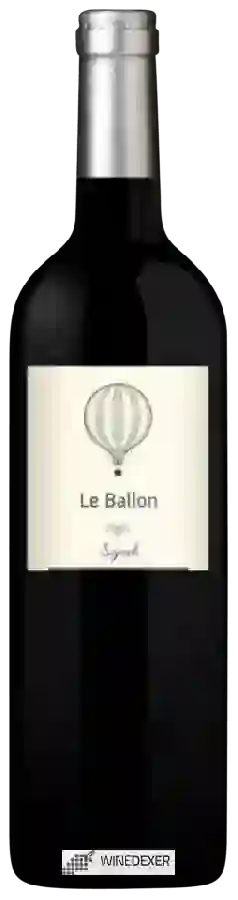
Winery Le BallonSyrah
 Red wine



In the mouth this red wine is a powerful with a nice balance between acidity and tannins.
This wine generally goes well with beef, veal or pasta.

Taste structure of the Syrah from the Winery Le Ballon
Light | Bold | |
Smooth | Tannic | |
Dry | Sweet | |
Soft | Acidic |
In the mouth the Syrah of Winery Le Ballon in the region of Pays d'Oc is a powerful with a nice balance between acidity and tannins.
Food and wine pairings with Syrah
Pairings that work perfectly with Syrah



Original food and wine pairings with Syrah
The Syrah of Winery Le Ballon matches generally quite well with dishes of beef, pasta or veal such as recipes of enchiladas franchouillards, tuna lasagna or calf sweetbread with mushrooms.
Details and technical informations about Winery Le Ballon's Syrah.
Discover the grape variety: Negro Aramo
Light and fruity reds with a clear ruby colour, silky tannins and an airy palate with preserved acidity, featuring aromas of red fruits and characteristic volcanic mineral notes from the Canarian basaltic soils. Discreet insular profile. Preserved for its heritage value, it is among the Canarian autochthonous grapes studied for their genetic and ampelographic insular interest. Spanish autochthonous black grape from the Canary Islands, grown in small quantities.
Last vintages of this wine
The best vintages of Syrah from Winery Le Ballon are 2017, 2016
Informations about the Winery Le Ballon
The Winery Le Ballon is one of of the world's greatest estates. It offers 7 wines for sale in the of Pays d'Oc to come and discover on site or to buy online.

The wine region of Pays d'Oc
The single-grape IGP par excellence: modern, accessible, frank and fruity wines, the popular signature of the Midi. Spicy Syrah reds (pepper, blackberry), round Merlot, structured Cabernet, generous Grenache, supple Cinsault. Crisp, tangy rosés. Opulent Chardonnay whites, lively Sauvignon, floral, apricoty Viognier.
The word of the wine: Marcottage
A vine reproduction technique that consists of burying a vine shoot that takes root and reproduces a plant with the same characteristics as the vine to which it is attached (synonym: provignage).


