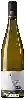
Winery LauffenerBetonique Grauburgunder
 White wine
In the mouth this white wine is a .
This wine generally goes well with pork, cured meat or mushrooms.
Taste structure of the Betonique Grauburgunder from the Winery Lauffener
Light | Bold | |
Dry | Sweet | |
Soft | Acidic |
In the mouth the Betonique Grauburgunder of Winery Lauffener in the region of Württemberg is a .
Food and wine pairings with Betonique Grauburgunder
Pairings that work perfectly with Betonique Grauburgunder


Original food and wine pairings with Betonique Grauburgunder

The Betonique Grauburgunder of Winery Lauffener matches generally quite well with dishes of pork, spicy food or mushrooms such as recipes of chicken in red wine, chicken massala or turkey blanquette with mushrooms.
Details and technical informations about Winery Lauffener's Betonique Grauburgunder.
Discover the grape variety: Dattier de Saint Vallier
Interspecific crossing obtained by Seyve-Villard between the 6468 Seibel and the Panse de Provence. This direct-producing hybrid is practically no longer multiplied, but can still be found among amateur gardeners or collectors.
Informations about the Winery Lauffener
The Winery Lauffener is one of of the world's great estates. It offers 92 wines for sale in the of Württemberg to come and discover on site or to buy online.

The wine region of Württemberg
Württemberg is known as Germany's premier red wine region. With almost 11,500 hectares (28,500 acres) of vineyards, it is the fourth-largest wine region in the country. Found adjacent to Baden and South of Franken, Wüttemberg is a particularly hilly and rural wine-region. Almost 70-percent of Württemberg wines are red, predominantly made from Trollinger, SchwarzRiesling and Lemberger.
The word of the wine: Tanin
A natural compound contained in the skin of the grape, the seed or the woody part of the bunch, the stalk. The maceration of red wines allows the extraction of tannins, which give the texture, the solidity and also the mellowness when the tannins are "ripe". The winemaker seeks above all to extract the tannins from the skin, the ripest and most noble. The tannins of the seed or stalk, which are "greener", especially in average years, give the wine hardness and astringency. The wines of Bordeaux (based on Cabernet and Merlot) are full of tannins, those of Burgundy much less so, with Pinot Noir containing little.