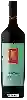
Winery Las VeletasPais
 Red wine



This wine generally goes well with beef and spicy food.

Food and wine pairings with Pais
Pairings that work perfectly with Pais


Original food and wine pairings with Pais
The Pais of Winery Las Veletas matches generally quite well with dishes of beef or spicy food such as recipes of barbecue burger or chicken legs and changing.
Details and technical informations about Winery Las Veletas's Pais.
Discover the grape variety: Chambourcin
Richly coloured and fruity reds with a purple colour and supple tannins, on aromas of black cherry, blackberry, blackcurrant, spices and herbal notes. Round palate, fresh finish, best drunk young. A disease-resistant hybrid, it produces organic and sustainable reds in the Loire Valley (IGP Atlantique, IGP Val de Loire), the United States (Pennsylvania, Missouri, Virginia) and Australia (New South Wales). French hybrid created in 1963 by Joannès Seyve.
Last vintages of this wine
The best vintages of Pais from Winery Las Veletas are 2017, 2016, 0, 2018
Informations about the Winery Las Veletas
The Winery Las Veletas is one of of the world's greatest estates. It offers 9 wines for sale in the of Maule Valley to come and discover on site or to buy online.

The wine region of Maule Valley
Historic cradle of Chilean viticulture (16th century). Quality revival around old-vine Carignan (70+ years): dense, deep reds with notes of blackberry, candied plum, spices and fine tannins, a unique expression. Sturdy Cabernet Sauvignon, supple Carménère (ripe pepper, black fruits), juicy Côt (Malbec), round Merlot. Some sharp Sauvignon Blanc.
The wine region of Central Valley
Heart of modern Chilean wine: structured, sunny reds, dense, blackcurranty Cabernet Sauvignon from Maipo (Chilean cradle of the grape), signature Carménère with notes of ripe pepper, black fruit and sweet spices from Colchagua, supple Merlot and deep Syrah. Round Chardonnay whites and lively, sharp Sauvignon. Mediterranean climate, 400 km between Andes and Pacific. Star sub-regions: Maipo, Cachapoal, Colchagua, Curicó, Maule.
The word of the wine: Deposit
Solid particles that can naturally coat the bottom of a bottle of wine. It is rather a guarantee that the wine has not been mistreated: in fact, to avoid the natural deposit, rather violent processes of filtration or cold passage (- 7 or - 8 °C) are used in order to precipitate the tartar (the small white crystals that some people confuse with crystallized sugar: just taste to dissuade you from it)