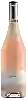
Winery La Grange d'AïnLa Combe du Prunier Faugères
 White wine


This wine is a blend of 6 varietals which are the Bourboulenc, the Clairette, the Marsanne, the Roussanne, the Vermentino and the Viognier.
In the mouth this white wine is a .
This wine generally goes well with vegetarian, poultry or lean fish.
The La Combe du Prunier Faugères of the Winery La Grange d'Aïn is in the top 70 of wines of Faugères.

Taste structure of the La Combe du Prunier Faugères from the Winery La Grange d'Aïn
Light | Bold | |
Dry | Sweet | |
Soft | Acidic |
In the mouth the La Combe du Prunier Faugères of Winery La Grange d'Aïn in the region of Languedoc-Roussillon is a .
Wine flavors and olphactive analysis




On the nose the La Combe du Prunier Faugères of Winery La Grange d'Aïn in the region of Languedoc-Roussillon often reveals types of flavors of spices.
Food and wine pairings with La Combe du Prunier Faugères
Pairings that work perfectly with La Combe du Prunier Faugères



Original food and wine pairings with La Combe du Prunier Faugères


The La Combe du Prunier Faugères of Winery La Grange d'Aïn matches generally quite well with dishes of pasta, vegetarian or poultry such as recipes of makroud, quiche without eggs or coconut chicken curry in thermomix.
Details and technical informations about Winery La Grange d'Aïn's La Combe du Prunier Faugères.
Discover the grape variety: Bourboulenc
Fresh and aromatic whites with an ample palate and preserved acidity despite the sun, on discreet aromas of white flowers (broom), citrus, exotic fruits, fennel and saline marine notes. Very late-ripening, retaining freshness in hot climates. Essential component of white Châteauneuf-du-Pape AOC, white Côtes-du-Rhône and Bandol blanc, and the absolute signature of La Clape AOC. Native southern French variety with very late ripening.
Last vintages of this wine

The best vintages of La Combe du Prunier Faugères from Winery La Grange d'Aïn are 2015, 2008, 0, 2010
Informations about the Winery La Grange d'Aïn
The Winery La Grange d'Aïn is one of of the world's greatest estates. It offers 5 wines for sale in the of Faugères to come and discover on site or to buy online.

The wine region of Faugères
Languedoc AOC on signature Palaeozoic schist, foothills of the Massif Central. Dense, mineral reds dominate: vibrant Syrah with signature notes of blackberry, violet, black pepper, garrigue and a smoky touch, tight tannins. Sun-drenched Grenache (ripe cherry, kirsch, spice), Mourvèdre compulsory for depth (leather, game, liquorice) — the only Languedoc AOC to require it. Carignan and Cinsault in support.
The wine region of Languedoc-Roussillon
Largest single French vineyard, dominated by sunny, generous reds. Spicy Syrah, candied Grenache (ripe fruit, garrigue), structured Carignan, deep Mourvèdre, supple Cinsault. Stars: structured Corbières, Minervois, Faugères, Saint-Chinian; round Côtes-du-Roussillon. Legendary vins doux naturels: Banyuls and Maury (fortified Grenache) with notes of cocoa, fig, prune.
The word of the wine: Concentrator
A device that removes water from grape must by reverse osmosis or entropy system. Its proponents say that it is better to remove water than to add sugar to produce more alcohol. The improperly used concentrator can also exaggerate bad tastes or greenness of tannins.