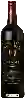
Château La Grande GelleyreBordeaux
 Red wine


In the mouth this red wine is a powerful with a nice balance between acidity and tannins.
This wine generally goes well with poultry, beef or veal.
Taste structure of the Bordeaux from the Château La Grande Gelleyre
Light | Bold | |
Smooth | Tannic | |
Dry | Sweet | |
Soft | Acidic |
In the mouth the Bordeaux of Château La Grande Gelleyre in the region of Bordeaux is a powerful with a nice balance between acidity and tannins.
Food and wine pairings with Bordeaux
Pairings that work perfectly with Bordeaux



Original food and wine pairings with Bordeaux

The Bordeaux of Château La Grande Gelleyre matches generally quite well with dishes of beef, veal or game (deer, venison) such as recipes of beef bourguignon with tomato, simple veal sauté or duck breast in the oven.
Details and technical informations about Château La Grande Gelleyre's Bordeaux.
Discover the grape variety: Morescono
Most certainly Italian, genetic analysis has confirmed that it is the variety known as nieddu mannu. It can be found in Corsica and Italy (Sardinia). It is registered in the Official Catalogue of Vat Varieties list A1. However, it should not be confused with morescola, also grown in Corsica, which is none other than aubun and muristellu, one of the synonyms of morrastel.
Informations about the Château La Grande Gelleyre
The Château La Grande Gelleyre is one of of the world's greatest estates. It offers 2 wines for sale in the of Bordeaux to come and discover on site or to buy online.

The wine region of Bordeaux
Bordeaux, in southwestern France, is one of the most famous, prestigious and prolific wine regions in the world. The majority of Bordeaux wines (nearly 90% of the production Volume) are the Dry, medium and Full-bodied red Bordeaux blends for which it is famous. The finest (and most expensive) are the wines of the great châteaux of Haut-Médoc and the right bank appellations of Saint-Émilion and Pomerol. The former focuses (at the highest level) on Cabernet Sauvignon, the latter on Merlot.
The word of the wine: R-C (champagne)
Harvesting-cooperator. It is the cooperative which elaborates the champagne of its members from their mixed contributions. It gives them bottles on which they stick their own label. It is legal without being intellectually honest. When you walk around the Champagne region, you may come across signs that say "Vigneron récoltant" to indicate a member of a cooperative. You can always ask him where his vats and press are.