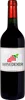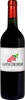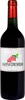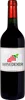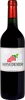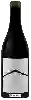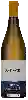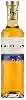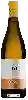
Winery KranixfeldChardonnay Mörbisch
 Red wine
This wine generally goes well with pork, vegetarian or poultry.

Food and wine pairings with Chardonnay Mörbisch
Pairings that work perfectly with Chardonnay Mörbisch



Original food and wine pairings with Chardonnay Mörbisch

The Chardonnay Mörbisch of Winery Kranixfeld matches generally quite well with dishes of pork, rich fish (salmon, tuna etc) or vegetarian such as recipes of turkey stuffed with chestnuts, baeckeoffe with fish or magic cake cheese quiche.
Details and technical informations about Winery Kranixfeld's Chardonnay Mörbisch.
Discover the grape variety: Chardonnay
Whites with many faces: mineral and taut at Chablis (lemon, green apple, flint), opulent and buttery at Meursault and Puligny-Montrachet (hazelnut, brioche, yellow fruits), tense and chalky in Champagne (Blanc de Blancs). Also vinified sparkling and widely exported (Sonoma, Margaret River, Casablanca). A Burgundian variety, a cross of Pinot Noir × Gouais Blanc, half-sibling of Aligoté.
Informations about the Winery Kranixfeld
The Winery Kranixfeld is one of of the world's greatest estates. It offers 7 wines for sale in the of Weinland to come and discover on site or to buy online.

The wine region of Weinland
Vast German-speaking region in north-eastern Switzerland, the country's largest production area. Signature Pinot Noir (Blauburgunder): fine, fresh reds with notes of cherry, raspberry, undergrowth and sweet spices, silky tannins. Elegant, delicate style, often barrel-aged. Also light, floral Müller-Thurgau (Riesling-Sylvaner), lively, lemony native Räuschling, ample Pinot Gris.
The word of the wine: Presses
The juice that results from pressing the grapes after fermentation. At the end of the maceration, the vats are emptied, the first juice obtained is called the free-run wine and the marc remaining at the bottom of the vat is then pressed to give the press wine. We say more quickly "the presses". Their quality varies according to the vintage and the maceration. A too vigorous extraction releases the tannins of pips and the wine of press can then prove to be very astringent. Often the winemaker raises it separately, deciding later whether or not to incorporate it totally or partially into the grand vin.