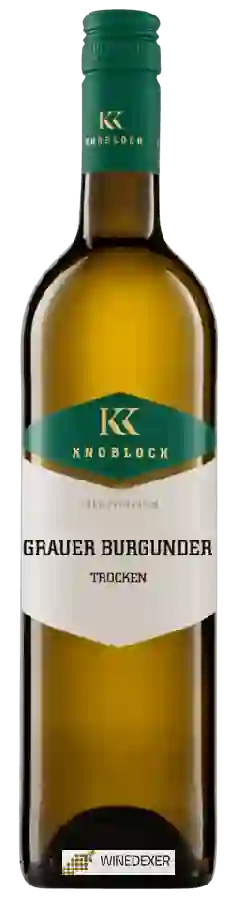
Winery KnoblochGrauer Burgunder Trocken
 White wine



In the mouth this white wine is a .
This wine generally goes well with pork, cured meat or mushrooms.

Taste structure of the Grauer Burgunder Trocken from the Winery Knobloch
Light | Bold | |
Dry | Sweet | |
Soft | Acidic |
In the mouth the Grauer Burgunder Trocken of Winery Knobloch in the region of Rheinhessen is a .
Wine flavors and olphactive analysis

Food and wine pairings with Grauer Burgunder Trocken
Pairings that work perfectly with Grauer Burgunder Trocken


Original food and wine pairings with Grauer Burgunder Trocken

The Grauer Burgunder Trocken of Winery Knobloch matches generally quite well with dishes of pork, spicy food or mushrooms such as recipes of caramelized pork ribs, pad thai or light lasagne without béchamel sauce.
Details and technical informations about Winery Knobloch's Grauer Burgunder Trocken.
Discover the grape variety: Arinto dos Açores
Vivid, mineral whites with a strong volcanic imprint, pale golden robe, tense palate, showing signature aromas of citrus (lemon), white flowers, white-fleshed fruits and remarkable saline marine nuances. Star of the Pico DOP and Biscoitos DOP on the basaltic soils of the volcanic islands of Pico and Terceira, representing the viticultural identity of the Atlantic archipelago. Portuguese white autochtone variety of the Azores, unrelated to continental Arinto.
Last vintages of this wine
The best vintages of Grauer Burgunder Trocken from Winery Knobloch are 2019, 2018, 2015, 0 and 2014.
Informations about the Winery Knobloch
The Winery Knobloch is one of of the world's greatest estates. It offers 35 wines for sale in the of Rheinhessen to come and discover on site or to buy online.

The wine region of Rheinhessen
71% white region: Riesling is king (5,000 ha), dry to off-dry, ripe yellow fruit, apple, citrus and fine saline minerality. Supple, floral Müller-Thurgau for everyday, the world's largest Silvaner plantation with herbaceous, straight notes. Historic cradle of off-sweet Liebfraumilch. Some supple reds (Dornfelder, Spätburgunder).
The word of the wine: Sweet (flavor)
The flavour provided by the residual sugars naturally present in the wine as well as by certain alcohols. This sensation can range from a simple impression of smoothness to a clear sweetness. We speak of roundness, fatness and mellowness.