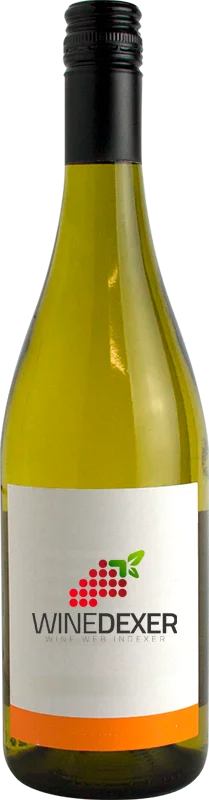
Winery Kocjančič RadoMalvasia
 White wine


In the mouth this white wine is a powerful.
This wine generally goes well with lean fish, shellfish or mature and hard cheese.
Taste structure of the Malvasia from the Winery Kocjančič Rado
Light | Bold | |
Dry | Sweet | |
Soft | Acidic |
In the mouth the Malvasia of Winery Kocjančič Rado in the region of Friuli-Venezia Giulia is a powerful.
Food and wine pairings with Malvasia
Pairings that work perfectly with Malvasia



Original food and wine pairings with Malvasia


The Malvasia of Winery Kocjančič Rado matches generally quite well with dishes of pasta, shellfish or mature and hard cheese such as recipes of pasta with crispy parma ham, creamy tomato squid or bacon and warm goat cheese quiche.
Details and technical informations about Winery Kocjančič Rado's Malvasia.
Discover the grape variety: Torrontés riojano
Most certainly of Argentine origin, very well known in this country, particularly in the Rioja and Salta regions. It is said to be the result of a cross between the Muscat d'Alexandrie and the Listan Prieto Noir, also known as Criolla Chica. We can note its resemblance with the torrontés sanjuanino, most certainly by the fact that it is also resulting from the same crossing. In Spain (Galicia), a grape variety bears the name of torrontés, it is most certainly the fernao Pires. Torrontés riojano is also present in Chile, but in France it is practically unknown.
Last vintages of this wine

The best vintages of Malvasia from Winery Kocjančič Rado are 2017, 2015, 0, 2013
Informations about the Winery Kocjančič Rado
The Winery Kocjančič Rado is one of of the world's greatest estates. It offers 9 wines for sale in the of Friuli-Venezia Giulia to come and discover on site or to buy online.

The wine region of Friuli-Venezia Giulia
Friuli-Venezia Giulia is an autonomous region in Italy, located in the extreme Northeast of the country, bordered by Austria and Slovenia to the north and east respectively. The eponymous wine region has four DOCGs, twelve DOCs and three PGIs and is best known for its white wine production. 77% of the region's wines are white, one of the highest proportions of any Italian region. The region's wines are distinctly different from other Italian wines in that they are made from non-traditional Grape varieties such as Sauvignon blanc, Riesling and Pinot blanc, as well as typically Italian varieties such as pinot gris and picolit.
The word of the wine: Yeast
Micro-organisms at the base of all fermentative processes. A wide variety of yeasts live and thrive naturally in the vineyard, provided that treatments do not destroy them. Unfortunately, their replacement by laboratory-selected yeasts is often the order of the day and contributes to the standardization of the wine. Yeasts are indeed involved in the development of certain aromas.