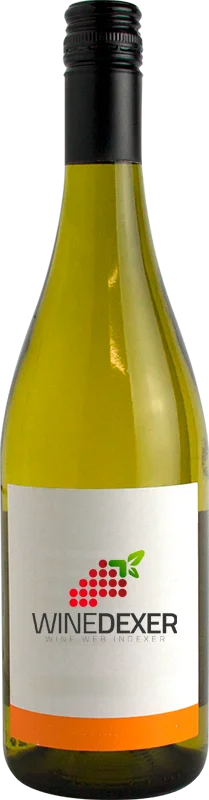
Winery Kessler-ZinkBerge Moscato Lieblich Semisweet
 White wine


This wine generally goes well with sweet desserts
Food and wine pairings with Berge Moscato Lieblich Semisweet
Pairings that work perfectly with Berge Moscato Lieblich Semisweet

Original food and wine pairings with Berge Moscato Lieblich Semisweet
The Berge Moscato Lieblich Semisweet of Winery Kessler-Zink matches generally quite well with dishes of sweet desserts such as recipes of very simple muffins.
Details and technical informations about Winery Kessler-Zink's Berge Moscato Lieblich Semisweet.
Discover the grape variety: Bertille Seyve 872
Interspecific crossing made by Bertille Seyve (1864-1944) between 85 Seibel and 2 Gaillard. This direct producing hybrid was mainly multiplied in the center of France where we found it and photographed it, but also in the departments of the Rhone valley, the Loiret valley, Isère, Vienne and Nièvre.
Last vintages of this wine
The best vintages of Berge Moscato Lieblich Semisweet from Winery Kessler-Zink are 0
Informations about the Winery Kessler-Zink
The Winery Kessler-Zink is one of of the world's great estates. It offers 80 wines for sale in the of Rheinhessen to come and discover on site or to buy online.

The wine region of Rheinhessen
Rheinhessen is Germany's largest region for producing the quality wines of the Qualitätswein bestimmter Anbaugebiete (QbA) and Prädikatswein designations, with roughly 26,500 hectares (65,000 acres) of Vineyard">Vineyards as of 2014. Many of its most significant viticultural areas are favorably influenced by the Rhine river, which runs aLong its North and eastern borders. The Rhine, along with the Nahe river to the west and the Haardt mountains to its South, form a natural border. Rheinhessen covers an area south of Rheingau, north of Pfalz and east of Nahe, and is located within the Rhineland-Palatinate federal state.
The word of the wine: Table wine
Everything that is not VQPRD (European designation for all appellation wines: quality wine produced in a specific region). In principle, the bottom of the ladder. But, as in Italy a decade ago (Vino da Tavola), this category is also a refuge for wines that are out of the ordinary, whose producers refuse to accept certain grape variety or vinification dictates.