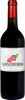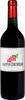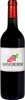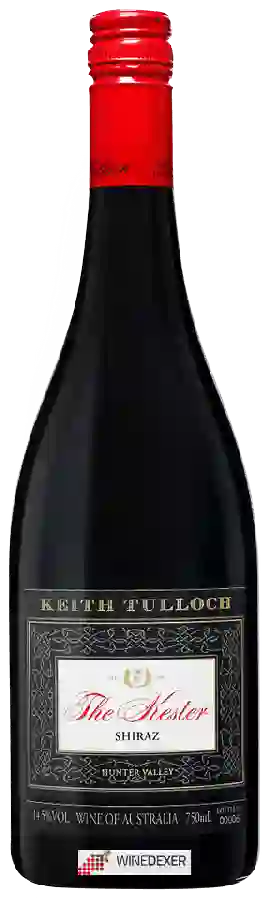
Winery Keith TullochThe Kester Shiraz
 Red wine


In the mouth this red wine is a powerful with a nice balance between acidity and tannins.
This wine generally goes well with poultry, beef or game (deer, venison).
The The Kester Shiraz of the Winery Keith Tulloch is in the top 10 of wines of Hunter Valley.
Taste structure of the The Kester Shiraz from the Winery Keith Tulloch
Light | Bold | |
Smooth | Tannic | |
Dry | Sweet | |
Soft | Acidic |
In the mouth the The Kester Shiraz of Winery Keith Tulloch in the region of Nouvelle-Galles du Sud is a powerful with a nice balance between acidity and tannins.
Wine flavors and olphactive analysis






On the nose the The Kester Shiraz of Winery Keith Tulloch in the region of Nouvelle-Galles du Sud often reveals types of flavors of non oak, earth or vegetal and sometimes also flavors of oak, spices or red fruit.
Food and wine pairings with The Kester Shiraz
Pairings that work perfectly with The Kester Shiraz



Original food and wine pairings with The Kester Shiraz

The The Kester Shiraz of Winery Keith Tulloch matches generally quite well with dishes of beef, lamb or game (deer, venison) such as recipes of beef tongue with vegetables and madeira sauce, chiche kebab in armenian or sarthe pot.
Details and technical informations about Winery Keith Tulloch's The Kester Shiraz.
Discover the grape variety: Auxerrois
Auxerrois is a white grape variety native to Lorraine, which is also found in Alsace and in the Loire Valley, where it took off in 1950. Its name comes from the nurseries in Auxerre where it found refuge during the Second World War. Often called Pinot Auxerrois, it is part of the Moselle, Alsace and Côtes-de-Toul AOC grape varieties. Auxerrois should not be confused with côt or malbec, which are red grape varieties from the Cahors region and which may bear the same name. The bunches of Auxerrois are of medium size with small berries. It is a semi-late grape variety whose buds only come out when temperatures are well above 10°C. Auxerrois wines are characterized by finesse and acidity and subtle aromas of exotic fruits, fruits and white flowers. In France, it represents 1,600 hectares of production and some small parcels of Auxerrois are also present in Luxembourg, Germany, Canada and South Africa (2,300 hectares in total).
Last vintages of this wine

The best vintages of The Kester Shiraz from Winery Keith Tulloch are 2013, 2005, 2003, 2014 and 2011.
Informations about the Winery Keith Tulloch
The Winery Keith Tulloch is one of of the world's greatest estates. It offers 49 wines for sale in the of Hunter Valley to come and discover on site or to buy online.

The wine region of Hunter Valley
The Hunter Valley is unquestionably the best known and most highly prized wine region in NewSouthWales. Its most famous wine style is its distinctive Dry Semillon, while Shiraz, is also long-established. It is also regarded as a pioneer of Australian Chardonnay. Hunter Valley Semillon Semillon was first planted here in the 1830s.
The wine region of Nouvelle-Galles du Sud
The NewSouthWales wine appellation is made up of 16 different regions and covers approximately 810,000 square kilometres (312,000 square miles). This is the Size of the state of New South Wales, one of the six that make up the federal Commonwealth of Australia. Although it is one of the smallest Australian states geographically, it has been the most populous since the first European settlements in the 18th century. The South East Australia GI area is the largest in Australia and can include any wine produced in New South Wales as well as Victoria, Tasmania and Parts of South Australia.
The word of the wine: Solera
A method of maturing practiced in Andalusia for certain sherries, which aims to continuously blend older and younger wines. It consists of stacking several layers of barrels; those located at ground level (solera) contain the oldest wines, the youngest being stored in the barrels on the upper level. The wine to be bottled is taken from the barrels on the lower level, which is replaced by younger wine from the upper level, and so on.