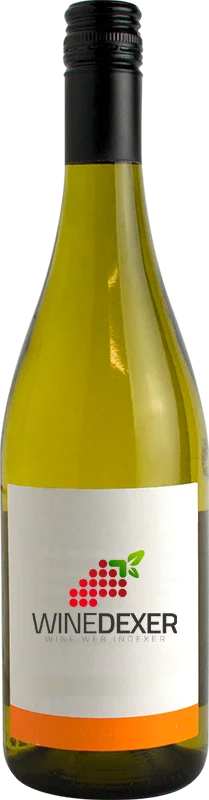
Winery Johannes B.Partie Fumé Sauvignon Blanc Trocken
 White wine


This wine generally goes well with vegetarian, rich fish (salmon, tuna etc) or shellfish.
Food and wine pairings with Partie Fumé Sauvignon Blanc Trocken
Pairings that work perfectly with Partie Fumé Sauvignon Blanc Trocken



Original food and wine pairings with Partie Fumé Sauvignon Blanc Trocken
The Partie Fumé Sauvignon Blanc Trocken of Winery Johannes B. matches generally quite well with dishes of rich fish (salmon, tuna etc), shellfish or vegetarian such as recipes of sea bream, tagliatelle with seafood and saffron cream or mushroom, bacon and gruyere quiche.
Details and technical informations about Winery Johannes B.'s Partie Fumé Sauvignon Blanc Trocken.
Discover the grape variety: Hegel
German, intraspecific cross obtained in 1955 between helfensteiner and heroldreber by August Karl Herold (1902-1973) at the Weinsberg Research Institute. With these same parents he also obtained the dornfelder. One can meet the Hegel in Switzerland, Belgium, Germany, ... completely unknown in France.
Last vintages of this wine
The best vintages of Partie Fumé Sauvignon Blanc Trocken from Winery Johannes B. are 0
Informations about the Winery Johannes B.
The Winery Johannes B. is one of of the world's greatest estates. It offers 31 wines for sale in the of Württemberg to come and discover on site or to buy online.

The wine region of Württemberg
Württemberg is known as Germany's premier red wine region. With almost 11,500 hectares (28,500 acres) of vineyards, it is the fourth-largest wine region in the country. Found adjacent to Baden and South of Franken, Wüttemberg is a particularly hilly and rural wine-region. Almost 70-percent of Württemberg wines are red, predominantly made from Trollinger, SchwarzRiesling and Lemberger.
The word of the wine: Slight
Supple and easy to drink wine.