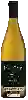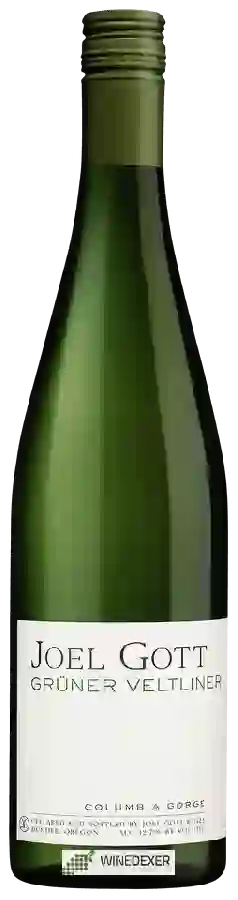
Winery Joel GottGrüner Veltliner
 White wine



This wine generally goes well with pork, vegetarian or lean fish.

Wine flavors and olphactive analysis

On the nose the Grüner Veltliner of Winery Joel Gott in the region of Washington often reveals types of flavors of earth, tree fruit or citrus fruit.
Food and wine pairings with Grüner Veltliner
Pairings that work perfectly with Grüner Veltliner



Original food and wine pairings with Grüner Veltliner



The Grüner Veltliner of Winery Joel Gott matches generally quite well with dishes of pork, rich fish (salmon, tuna etc) or shellfish such as recipes of eggs in meurette, salmon in foil in the microwave or scallops with cream.
Details and technical informations about Winery Joel Gott's Grüner Veltliner.
Discover the grape variety: Gravesina
Simple, fresh dry grey-whites with a pale pink robe with copper skin, a supple palate with moderate acidity on undemonstrative citrus and white flower aromas. Discreet rustic profile. Preserved in a few ampelographic collections, it belongs to the ancient varieties with patrimonial value whose commercial diffusion has virtually disappeared and which are studied for their genetic interest. Rare and poorly documented grey variety, grown in confidential quantities.
Last vintages of this wine
The best vintages of Grüner Veltliner from Winery Joel Gott are 0, 2015
Informations about the Winery Joel Gott
The Winery Joel Gott is one of of the world's great estates. It offers 34 wines for sale in the of Washington to come and discover on site or to buy online.

The wine region of Washington
2nd US producer by volume, on the arid, sunny Columbia Valley. Star Cabernet Sauvignon (~60% of reds): powerful and structured with signature notes of blackcurrant, blackberry, cedar, dry herbs and graphite, firm tannins. Fleshy, peppery Syrah (black fruits, smoked meat). Round, fruity Merlot, historic mineral Riesling (dry and off-dry), precise Chardonnay and ample Sémillon.
The word of the wine: Reduction
A physiological and chemical phenomenon that occurs in wine in the absence of oxygen. The smell of reduction is characterized by animal and sometimes fetid notes that disappear in principle with aeration. It is recommended to decant reduced wines.