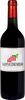
Winery Jean Marc AstrucLiberté Faugères
 Red wine



In the mouth this red wine is a powerful with a nice balance between acidity and tannins.
This wine generally goes well with beef, veal or pasta.
Taste structure of the Liberté Faugères from the Winery Jean Marc Astruc
Light | Bold | |
Smooth | Tannic | |
Dry | Sweet | |
Soft | Acidic |
In the mouth the Liberté Faugères of Winery Jean Marc Astruc in the region of Languedoc-Roussillon is a powerful with a nice balance between acidity and tannins.
Food and wine pairings with Liberté Faugères
Pairings that work perfectly with Liberté Faugères



Original food and wine pairings with Liberté Faugères
The Liberté Faugères of Winery Jean Marc Astruc matches generally quite well with dishes of beef, pasta or veal such as recipes of stewed beef heart, spaghetti with garlic or veal fillet stroganoff.
Details and technical informations about Winery Jean Marc Astruc's Liberté Faugères.
Discover the grape variety: Galotta
Intraspecific cross between ancellotta and gamay à jus blanc obtained in 1981 at the Agroscope Research Station in Pully (Switzerland).
Last vintages of this wine
The best vintages of Liberté Faugères from Winery Jean Marc Astruc are 2015
Informations about the Winery Jean Marc Astruc
The Winery Jean Marc Astruc is one of of the world's greatest estates. It offers 8 wines for sale in the of Faugères to come and discover on site or to buy online.

The wine region of Faugères
Faugeres is an appellation in the Languedoc-Roussillon region of southern France. Although it also covers white and rosé wines, the appellation is best known for its Rich, ripe red wines made from the classic Rhone varieties of Syrah, Grenache and Mourvèdre, as well as the more MediterraneanCinsaut and Lladoner Pelut. The appellation covers the southern slopes of a series of hills only a few kilometres from the Mediterranean coast. The town of Faugeres forms the centre of the area, which extends 10 km from east to west.
The wine region of Languedoc-Roussillon
Languedoc (formerly Coteaux du Languedoc) is a key appellation used in the Languedoc-Roussillon wine region of southern France. It covers Dry table wines of all three colors (red, white and rosé) from the entire region, but leaves Sweet and Sparkling wines to other more specialized appellations. About 75% of all Languedoc wines are red, with the remaining 25% split roughly down the middle between whites and rosés. The appellation covers most of the Languedoc region and almost a third of all the vineyards in France.
The word of the wine: Tastevin
Metal cup, wide and of low height, being used to mirror and taste the wine. Still used in wine brotherhoods for its emblematic and folkloric character, the tastevin has been replaced by the various tasting glasses.