The Winery Jean Julien d' Aleyrac of Vin de Pays of Pays d'Oc
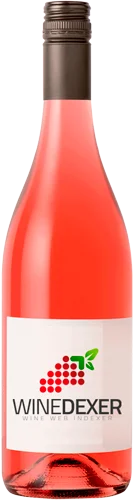
The Winery Jean Julien d' Aleyrac is one of the best wineries to follow in Vin de Pays.. It offers 3 wines for sale in of Vin de Pays to come and discover on site or to buy online.
Looking for the best Winery Jean Julien d' Aleyrac wines in Vin de Pays among all the wines in the region? Check out our tops of the best red, white or effervescent Winery Jean Julien d' Aleyrac wines. Also find some food and wine pairings that may be suitable with the wines from this area. Learn more about the region and the Winery Jean Julien d' Aleyrac wines with technical and enological descriptions.
How Winery Jean Julien d' Aleyrac wines pair with each other generally quite well with dishes of lamb, rich fish (salmon, tuna etc) or poultry such as recipes of pastasotto pepper merguez (risotto style pasta), wild rice salad with tuna or fried squid.
Vin de Pays (VDP), the French national equivalent of PGI (Protected Geographical Indication) at the European level, is a quality category of French wines, positioned between Vin de Table (VDT) and Appellation d'Origine Contrôlée (AOC). This layer of the French appellation system was initially introduced in September 1968 by the INAO, the official appellation authority. It underwent several early revisions in the 1970s, followed by substantial changes in September 2000 and again in 2009, when all existing VDT titles were automatically registered with the European Union as PGI. Producers retain the choice of using either the VDP or PGI titles on their labels, or both - in the form "IGP-Vin de Pays".
There are now more than 150 VDP/IGP titles, mainly covering the southern third of France. The "Vin de Pays" level is intended to benefit both consumers and wine producers. It allows consumers to know clearly where a wine comes from, while producers are empowered to produce wine outside the constraints of traditional AOC laws. The most obvious freedoms are the higher yields allowed and a more comprehensive list of permitted Grape varieties.
How Winery Jean Julien d' Aleyrac wines pair with each other generally quite well with dishes of rich fish (salmon, tuna etc), shellfish or vegetarian such as recipes of salmon pizza, carne de porco alentejana (sliced pork with vongoles) recipe... or tuna, pepper and tomato quiche.
Grolleau noir is a grape variety that originated in France (Loire Valley). It produces a variety of grape specially used for wine making. It is rare to find this grape to eat on our tables. This variety of grape is characterized by large bunches of grapes of medium size. Grolleau noir can be found in several vineyards: Loire Valley, South West, Cognac, Bordeaux, Provence & Corsica, Rhone Valley, Armagnac, Languedoc & Roussillon.
How Winery Jean Julien d' Aleyrac wines pair with each other generally quite well with dishes of lamb, rich fish (salmon, tuna etc) or poultry such as recipes of tajine of beef balls and merguez, sea bass in mustard and rosemary wrappers or potjevleesch.
A vine reproduction technique that consists of burying a vine shoot that takes root and reproduces a plant with the same characteristics as the vine to which it is attached.
Planning a wine route in the of Vin de Pays? Here are the wineries to visit and the winemakers to meet during your trip in search of wines similar to Winery Jean Julien d' Aleyrac.
Cabernet Franc is one of the oldest red grape varieties in Bordeaux. The Libourne region is its terroir where it develops best. The terroirs of Saint-Emilion and Fronsac allow it to mature and develop its best range of aromas. It is also the majority in many blends. The very famous Château Cheval Blanc, for example, uses 60% Cabernet Franc. The wines produced with Cabernet Franc are medium in colour with fine tannins and subtle aromas of small red fruits and spices. When blended with Merlot and Cabernet Sauvignon, it brings complexity and a bouquet of aromas to the wine. It produces fruity wines that can be drunk quite quickly, but whose great vintages can be kept for a long time. It is an earlier grape variety than Cabernet Sauvignon, which means that it is planted as far north as the Loire Valley. In Anjou, it is also used to make sweet rosé wines. Cabernet Franc is now used in some twenty countries in Europe and throughout the world.