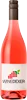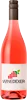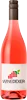
Winery Jean Julien d' AleyracRosé d\'Anjou
 Red wine
This wine generally goes well with
Details and technical informations about Winery Jean Julien d' Aleyrac's Rosé d\'Anjou.
Discover the grape variety: Sangiovese
Originally from Italy, it is the famous Sangiovese of Tuscany producing the famous wines of Brunello de Montalcino and Chianti. This variety is registered in the Official Catalogue of Wine Grape Varieties, list A1. According to recent genetic analysis, it is the result of a natural cross between the almost unknown Calabrese di Montenuovo (mother) and Ciliegiolo (father).
Informations about the Winery Jean Julien d' Aleyrac
The Winery Jean Julien d' Aleyrac is one of of the world's greatest estates. It offers 3 wines for sale in the of Rosé d'Anjou to come and discover on site or to buy online.

The wine region of Rosé d'Anjou
The wine region of Rosé d'Anjou is located in the region of Anjou of Loire Valley of France. Wineries and vineyards like the Domaine Drouet Fréres or the Domaine André Vinet produce mainly wines pink, sweet and sparkling. The most planted grape varieties in the region of Rosé d'Anjou are Cabernet franc, Grolleau and Gamay noir, they are then used in wines in blends or as a single variety. On the nose of Rosé d'Anjou often reveals types of flavors of apples, cantaloupe or menthol and sometimes also flavors of floral, tropical fruit or butter.
The wine region of Loire Valley
The Loire Valley is a key wine region in western France. It follows the course of the Loire River on its Long journey through the heart of France, from the inland hills of the Auvergne to the plains of the French Atlantic coast near Nantes (Muscadet country). Important in terms of quantity and quality, the region produces large quantities (about 4 million h/l each year) of everyday wines, as well as some of France's greatest wines. Diversity is another of the region's major assets; the styles of wine produced here range from the light, tangy Muscadet to the Sweet, honeyed Bonnezeaux, the Sparkling whites of Vouvray and the juicy, Tannic reds of Chinon and Saumur.
The word of the wine: Tartar (deposit)
White, chalky deposits that occur as a result of precipitation inside bottles and are often considered by consumers as a defect. They are in fact tartaric salts formed by tartaric acid, potassium and calcium naturally present in the wine. This deposit does not alter the quality of the wine and can be eliminated by a simple decanting.