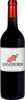
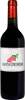
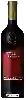
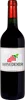
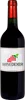
Winery Jasci & MarchesaniRosso
 Red wine
In the mouth this red wine is a powerful.
This wine generally goes well with beef, lamb or pasta.

Taste structure of the Rosso from the Winery Jasci & Marchesani
Light | Bold | |
Smooth | Tannic | |
Dry | Sweet | |
Soft | Acidic |
In the mouth the Rosso of Winery Jasci & Marchesani in the region of Abruzzo is a powerful.
Food and wine pairings with Rosso
Pairings that work perfectly with Rosso



Original food and wine pairings with Rosso
The Rosso of Winery Jasci & Marchesani matches generally quite well with dishes of beef, pasta or lamb such as recipes of roast pork with pineapple, eggplant and zucchini lasagna or rack of lamb with herbs.
Details and technical informations about Winery Jasci & Marchesani's Rosso.
Discover the grape variety: Oberlin
Colourful, simple reds with a sustained ruby robe, supple tannins and an airy palate, with red fruit aromas and discreet hybrid notes. Early-ripening and resistant. Grown mainly in Canada (Quebec, Ontario) and the north-eastern United States for rigorous continental vineyards. Synonym of Oberlin Noir, French black hybrid obtained in 1860 by Christian Oberlin in Colmar, Alsace (gamay × millardet et grasset).
Informations about the Winery Jasci & Marchesani
The Winery Jasci & Marchesani is one of of the world's great estates. It offers 21 wines for sale in the of Abruzzo to come and discover on site or to buy online.

The wine region of Abruzzo
Accessible, identity-driven Italian duo. Montepulciano d'Abruzzo as red: deep colour, intense aromas of black cherry, ripe plum, sweet spices and balsamic notes, round tannins and a gourmet finish, from everyday to age-worthy Riserva. Cerasuolo d'Abruzzo DOCG as a fleshy, fruity rosé (strawberry, pomegranate). Trebbiano d'Abruzzo as a straight white with citrus and white flowers, sublimated by a few cult producers (Valentini).
The word of the wine: Grand Cru
In Burgundy, the fourth and final level of classification (above the regional, communal and premier cru appellations), designating the wines produced on delimited plots of land (the climats) whose name alone constitutes the appellation. The climats classified as Grand Cru are 32 in the Côte d'Or plus one in Chablis which is divided into 7 distinct climats. Representing barely 1.5% of the production, the Grand Crus are the aristocracy of Burgundy wines.