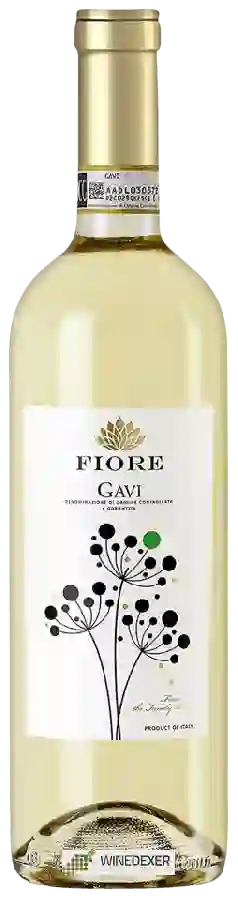
Winery FioreGavi
 White wine


In the mouth this white wine is a with a nice freshness.
This wine generally goes well with appetizers and snacks, lean fish or shellfish.
Taste structure of the Gavi from the Winery Fiore
Light | Bold | |
Dry | Sweet | |
Soft | Acidic |
In the mouth the Gavi of Winery Fiore in the region of Piedmont is a with a nice freshness.
Wine flavors and olphactive analysis

Food and wine pairings with Gavi
Pairings that work perfectly with Gavi



Original food and wine pairings with Gavi


The Gavi of Winery Fiore matches generally quite well with dishes of pasta, shellfish or appetizers and snacks such as recipes of pasta with tuna and tomato sauce, crab matoutou or preparation of the olives (black olives in brine).
Details and technical informations about Winery Fiore's Gavi.
Discover the grape variety: Voltis
Wine grape variety of the INRA-Resdur1 series with polygenic resistance (two genes for mildew and powdery mildew have been identified), resulting from an interspecific cross, obtained in 2002, between Villaris and Mtp 3159-2-12 (for the latter, one of its parents is Vitis rotundifolia, which is resistant to Pierce's disease, mildew, grey rot, etc.). Little multiplied, it is registered in the Official Catalogue of wine grape varieties list A1.
Last vintages of this wine
The best vintages of Gavi from Winery Fiore are 0
Informations about the Winery Fiore
The Winery Fiore is one of of the world's greatest estates. It offers 15 wines for sale in the of Piedmont to come and discover on site or to buy online.

The wine region of Piedmont
Piedmont (Piemonte) holds an unrivalled place among the world's finest wine regions. Located in northwestern Italy, it is home to more DOCG wines than any other Italian region, including such well-known and respected names as Barolo, Barbaresco and Barbera d'Asti. Though famous for its Austere, Tannic, Floral">floral reds made from Nebbiolo, Piedmont's biggest success story in the past decade has been Moscato d'Asti, a Sweet, Sparkling white wine. Piedmont Lies, as its name suggests, at the foot of the Western Alps, which encircle its northern and western sides and form its naturally formidable border with Provence, France.
The word of the wine: Côte des Blancs
One of the most famous terroirs of the Champagne region, from Épernay to Vertus, mainly devoted to Chardonnay, hence its name. The villages of Chouilly, Cramant, Cuis, Mesnil-sur-Oger, Avize, etc., lying on the chalk, are in a way to Champagne what Meursault, Chablis and Puligny are to Burgundy.