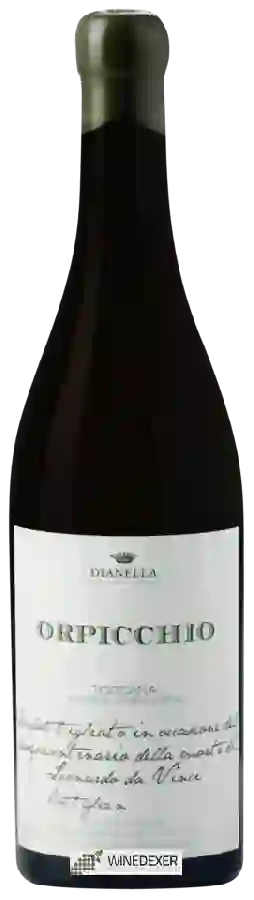
Winery DianellaOrpicchio
 White wine
In the mouth this white wine is a with a nice freshness.
This wine generally goes well with vegetarian, appetizers and snacks or lean fish.

Taste structure of the Orpicchio from the Winery Dianella
Light | Bold | |
Dry | Sweet | |
Soft | Acidic |
In the mouth the Orpicchio of Winery Dianella in the region of Tuscany is a with a nice freshness.
Food and wine pairings with Orpicchio
Pairings that work perfectly with Orpicchio



Original food and wine pairings with Orpicchio


The Orpicchio of Winery Dianella matches generally quite well with dishes of pasta, vegetarian or appetizers and snacks such as recipes of chicken and mushroom risotto, zucchini and goat cheese quiche or dried tomato, feta and green olive cake.
Details and technical informations about Winery Dianella's Orpicchio.
Discover the grape variety: Tempranillo
Elegant, structured reds with aromas of strawberry, cherry, plum, leather, blond tobacco and pronounced vanilla from long oak ageing. Ranges from Joven to Crianza, Reserva and Gran Reserva. Star of Rioja DOCa, Ribera del Duero DO and Toro DO, also shines in the Douro as Tinta Roriz/Aragonez. One of the world's most planted Spanish varieties.
Informations about the Winery Dianella
The Winery Dianella is one of of the world's great estates. It offers 16 wines for sale in the of Tuscany to come and discover on site or to buy online.

The wine region of Tuscany
Kingdom of Sangiovese: upright reds with cherry, plum, dried herbs and leather, lively acidity and firm tannins. Fleshy, food-friendly Chianti Classico DOCG, deep long-ageing Brunello di Montalcino (spice, tobacco, ripe black fruit), elegant Vino Nobile di Montepulciano. On the coast, Bolgheri crafts the opulent Cabernet- and Merlot-based 'Super Tuscans'. Some fresh white Vernaccia.
The word of the wine: Short
Said of a wine that leaves little trace in the mouth after tasting (also called "short in the mouth").