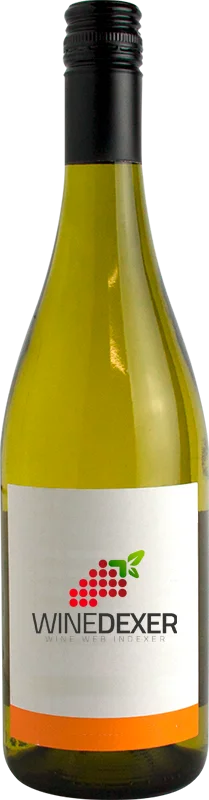
Winery I CapitaniFalanghina
 White wine
In the mouth this white wine is a powerful.
This wine generally goes well with vegetarian, appetizers and snacks or shellfish.
Taste structure of the Falanghina from the Winery I Capitani
Light | Bold | |
Dry | Sweet | |
Soft | Acidic |
In the mouth the Falanghina of Winery I Capitani in the region of Campania is a powerful.
Food and wine pairings with Falanghina
Pairings that work perfectly with Falanghina



Original food and wine pairings with Falanghina
The Falanghina of Winery I Capitani matches generally quite well with dishes of shellfish, vegetarian or appetizers and snacks such as recipes of marmite dieppoise, salmon and goat cheese quiche or fake foie gras.
Details and technical informations about Winery I Capitani's Falanghina.
Discover the grape variety: Cal 6-04
Interspecific crossing obtained in Switzerland by Valentin Blattner between Riesling x Sauvignon Blanc and a variety whose name has not yet been communicated and which is resistant to the main cryptogamic diseases. VB Cal 6-04 can be found in Switzerland, Belgium, Germany, etc. In France, a few plantations have been carried out and it is registered in the Official Catalogue of wine grape varieties under the name Sauvignac liste A.
Informations about the Winery I Capitani
The Winery I Capitani is one of of the world's great estates. It offers 13 wines for sale in the of Campania to come and discover on site or to buy online.

The wine region of Campania
Campania is a region that forms the "tibia" of the boot of Italy, and whose largest city is Naples. Its name comes from Campania felix, a Latin phrase meaning roughly "happy land". The region has strong historical links with wine and vineyards, dating back to the 12th century BC, and is one of the oldest wine regions in Italy. The considerable influence of ancient empires, including the Greeks, Romans and Byzantines, means that some of the varieties in this region are linked to historical legends.
The word of the wine: Rootstock
American vine on which a French vine is grafted. This is the consequence of the phylloxera that destroyed the vineyard at the end of the 19th century: after much trial and error, it was discovered that the "pest" spared the roots of the American vines, and the technique became widespread.