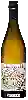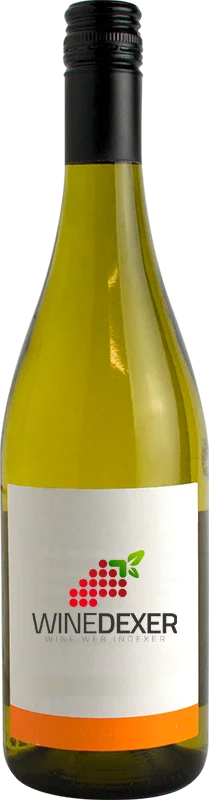
Winery Herrengut St. MartinSt. Martiner Schloss Ludwigshöhe Lagenwein Weissburgunder Feinherb
 White wine
In the mouth this white wine is a powerful with a nice freshness.
This wine generally goes well with rich fish (salmon, tuna etc), shellfish or mild and soft cheese.
Taste structure of the St. Martiner Schloss Ludwigshöhe Lagenwein Weissburgunder Feinherb from the Winery Herrengut St. Martin
Light | Bold | |
Dry | Sweet | |
Soft | Acidic |
In the mouth the St. Martiner Schloss Ludwigshöhe Lagenwein Weissburgunder Feinherb of Winery Herrengut St. Martin in the region of Pfalz is a powerful with a nice freshness.
Food and wine pairings with St. Martiner Schloss Ludwigshöhe Lagenwein Weissburgunder Feinherb
Pairings that work perfectly with St. Martiner Schloss Ludwigshöhe Lagenwein Weissburgunder Feinherb



Original food and wine pairings with St. Martiner Schloss Ludwigshöhe Lagenwein Weissburgunder Feinherb

The St. Martiner Schloss Ludwigshöhe Lagenwein Weissburgunder Feinherb of Winery Herrengut St. Martin matches generally quite well with dishes of rich fish (salmon, tuna etc), shellfish or mild and soft cheese such as recipes of gratin of ravioli with salmon, blanquette of the sea or butternut and goat cheese gratin.
Details and technical informations about Winery Herrengut St. Martin's St. Martiner Schloss Ludwigshöhe Lagenwein Weissburgunder Feinherb.
Discover the grape variety: Chelois
Interspecific cross between 5163 Seibel (2 Gaillard x 2510 Seibel) and 5593 Seibel (880 Seibel x 4202 Seibel) obtained by Albert Seibel (1844-1936). The Chelois is related to the De Chaunac and the Chancellor. It has been propagated in Canada since 1946 and 1948 for the United States, in France it is no longer planted, therefore no longer present in the vineyard and almost disappearing.
Informations about the Winery Herrengut St. Martin
The Winery Herrengut St. Martin is one of of the world's great estates. It offers 71 wines for sale in the of Pfalz to come and discover on site or to buy online.

The wine region of Pfalz
Pfalz is a key wine producing region in western Germany, located between the Rhein/Rhine river and the low-lying Haardt mountain range (a natural continuation of the Alsatian Vosges). It covers a rectangle of land 45 miles (75km) Long and 15 miles (25km) wide. To the NorthLiesRheinhessen; to the South, the French border and Alsace. In terms of both quality and quantity, Pfalz is one of Germany's most important regions, and one which shows great promise for the future.
The word of the wine: Oxidative (breeding)
A method of ageing which aims to give the wine certain aromas of evolution (dried fruit, bitter orange, coffee, rancio, etc.) by exposing it to the air; it is then matured either in barrels, demi-muids or unoaked casks, sometimes stored in the open air, or in barrels exposed to the sun and to temperature variations. This type of maturation characterizes certain natural sweet wines, ports and other liqueur wines.