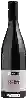
Winery HegerBlauer Spätburgunder
 Red wine


In the mouth this red wine is a with a nice freshness.
This wine generally goes well with poultry, beef or veal.

Taste structure of the Blauer Spätburgunder from the Winery Heger
Light | Bold | |
Smooth | Tannic | |
Dry | Sweet | |
Soft | Acidic |
In the mouth the Blauer Spätburgunder of Winery Heger in the region of Baden is a with a nice freshness.


Food and wine pairings with Blauer Spätburgunder
Pairings that work perfectly with Blauer Spätburgunder



Original food and wine pairings with Blauer Spätburgunder

The Blauer Spätburgunder of Winery Heger matches generally quite well with dishes of beef, veal or game (deer, venison) such as recipes of beef tongue in hot pickle sauce, tournedos rossini with port sauce or aiguillette of duck normandy style.
Details and technical informations about Winery Heger's Blauer Spätburgunder.
Discover the grape variety: Uva rara
Supple, fruity reds with a light ruby hue, smooth tannins and a fresh, light palate, showing aromas of cherry, red fruits (raspberry) and soft spices. Accessible north-west Italian profile. Traditionally blended with Croatina and Vespolina, it contributes to the typicity of the reds of Oltrepò Pavese and Novarese. Italian black grape grown in Lombardy and Piedmont.
Last vintages of this wine

The best vintages of Blauer Spätburgunder from Winery Heger are 2010, 2011, 0, 2012
Informations about the Winery Heger
The Winery Heger is one of of the world's great estates. It offers 37 wines for sale in the of Baden to come and discover on site or to buy online.

The wine region of Baden
German capital of Pinot Noir (Spätburgunder): silky, fine reds with notes of red fruits, cherry, undergrowth and sweet spices, melted tannins. Round Grauburgunder (Pinot Gris), lively Weissburgunder, supple Müller-Thurgau, mineral Riesling. Germany's 3rd region (15,000 ha) in Baden-Württemberg facing Alsace, one of the country's warmest climates, volcanic soils at the Kaiserstuhl. Cradle of modern great German reds, elegant and fine.
The word of the wine: Performance
Quantity of grapes harvested per hectare. In AOC, the average yield is limited on the proposal of the appellation syndicate, validated by the Inao. The use of high-performance plant material (especially clones) and better control of vine diseases have increased yields. This is not without consequences on the quality of the wines (dilution) and on the state of the market (too much wine). We must not over-simplify: low yields are not synonymous with quality, and it is often in years with generous harvests that we find the greatest vintages (1982 and 1986 in Bordeaux, 1996 in Champagne, 1990 and 2005 in Burgundy...).