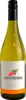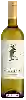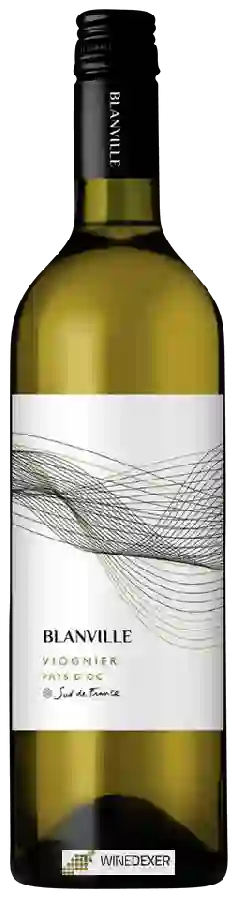
Château Haut BlanvilleViognier
 White wine


In the mouth this white wine is a powerful.
This wine generally goes well with pork, poultry or rich fish (salmon, tuna etc).

Taste structure of the Viognier from the Château Haut Blanville
Light | Bold | |
Dry | Sweet | |
Soft | Acidic |
In the mouth the Viognier of Château Haut Blanville in the region of Pays d'Oc is a powerful.
Food and wine pairings with Viognier
Pairings that work perfectly with Viognier



Original food and wine pairings with Viognier

The Viognier of Château Haut Blanville matches generally quite well with dishes of pork, rich fish (salmon, tuna etc) or spicy food such as recipes of pasta "carbonara" à la française, half-cooked bluefin tuna or red mullet fillets in saffron sauce.
Details and technical informations about Château Haut Blanville's Viognier.
Discover the grape variety: Viognier
Opulent, heady whites, rich and silky, with intense aromas of apricot, yellow peach, mango, violet, honeysuckle and musky, honeyed notes. Discreet acidity, creamy finish. Star of Condrieu AOC and Château-Grillet AOC, co-vinified in Côte-Rôtie with Syrah (up to 20%). Widely exported to California (Central Coast), Australia (Eden Valley) and Languedoc. A Rhône variety.
Last vintages of this wine
The best vintages of Viognier from Château Haut Blanville are 2017
Informations about the Château Haut Blanville
The Château Haut Blanville is one of of the world's great estates. It offers 80 wines for sale in the of Pays d'Oc to come and discover on site or to buy online.

The wine region of Pays d'Oc
The single-grape IGP par excellence: modern, accessible, frank and fruity wines, the popular signature of the Midi. Spicy Syrah reds (pepper, blackberry), round Merlot, structured Cabernet, generous Grenache, supple Cinsault. Crisp, tangy rosés. Opulent Chardonnay whites, lively Sauvignon, floral, apricoty Viognier.
The word of the wine: Deposit
Solid particles that can naturally coat the bottom of a bottle of wine. It is rather a guarantee that the wine has not been mistreated: in fact, to avoid the natural deposit, rather violent processes of filtration or cold passage (- 7 or - 8 °C) are used in order to precipitate the tartar (the small white crystals that some people confuse with crystallized sugar: just taste to dissuade you from it)