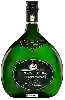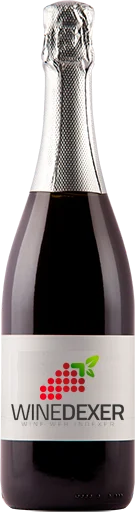
Winery Hans WirschingCuvée Brut
 Sparkling wine
This wine generally goes well with poultry, lean fish or shellfish.
Food and wine pairings with Cuvée Brut
Pairings that work perfectly with Cuvée Brut



Original food and wine pairings with Cuvée Brut


The Cuvée Brut of Winery Hans Wirsching matches generally quite well with dishes of shellfish, spicy food or poultry such as recipes of oven-roasted breton lobster with salted butter from the jaguin brothers (the..., jambalaya (louisiana) or spanish omelette.
Details and technical informations about Winery Hans Wirsching's Cuvée Brut.
Discover the grape variety: Kerner
Intraspecific crossing between frankenthal and riesling obtained in Germany in 1929 by August Karl Herold (1902/1973). In 1951 and by crossing it with the sylvaner, we obtained the juwel. It should be noted that there is a mutation of Kerner, discovered in 1974 and bearing the name of kernling, with grapes of pink-grey to red-grey colour at full maturity. Kerner can be found in Germany, Belgium, Slovenia, Austria, Switzerland, Italy, South Africa, Australia, the United States, Canada, Japan... practically unknown in France except in a few Moselle vineyards.
Informations about the Winery Hans Wirsching
The Winery Hans Wirsching is one of of the world's great estates. It offers 93 wines for sale in the of Franken to come and discover on site or to buy online.

The wine region of Franken
Franken, or Franconia in English, is a wine-growing region in the northwest of Germany's historic state of Bavaria. Though Bavaria may be more famous for its beer, Franken boasts a proud viticultural tradition and is one of the most unique regions in the country. There are just over 6,100 hectares (15,073 ac) of vines Planted in Franken and around 80 percent of these are white Grape varieties. Here, Riesling plays second fiddle to the often overlooked Silvaner and Müller-Thurgau.
The word of the wine: White winemaking
White wines are obtained by fermentation of the juice after pressing. A pre-fermentation maceration is sometimes practiced to extract the aromatic substances from the skins. White wines are normally made from white grapes, but can also be made from red grapes (blanc de noirs). The grapes are then pressed as soon as they arrive at the vat house without maceration in order to prevent the colouring matter contained in the skins from "staining" the wine.