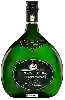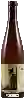
Winery Hans WirschingBacchus
 White wine



This wine generally goes well with
Details and technical informations about Winery Hans Wirsching's Bacchus.
Discover the grape variety: Mauzac
Mauzac is a grape variety, black or white (the white one is better known), originating from the South-West. It is mainly cultivated in the vineyards of Gaillac and Limoux (where it is called blanquette), on about 5,000 hectares. mauzac has medium-sized bunches, composed of berries whose colour can vary from green to red depending on the maturity of the grapes. This grape variety likes limestone and clay-limestone soils, and it is here that it is most productive. Its white wines are fat, with little acidity and marked by aromas of ripe apple, pear, honey, quince, vanilla and violet, typical of the great sweet wines of Gaillac. mauzac also produces the famous Blanquette-de-Limoux in rural method. In this region, Mauzac is competing with Sauvignon, Chenin and Chardonnay, especially for sparkling wines which are more similar to Champagne. It is also used in some appellations such as Entre-deux-Mers, Sainte-Foy-Bordeaux, Côtes-de-Duras, Vins-de-Lavilledieu...
Last vintages of this wine
The best vintages of Bacchus from Winery Hans Wirsching are 0
Informations about the Winery Hans Wirsching
The Winery Hans Wirsching is one of of the world's great estates. It offers 93 wines for sale in the of Franken to come and discover on site or to buy online.

The wine region of Franken
Franken, or Franconia in English, is a wine-growing region in the northwest of Germany's historic state of Bavaria. Though Bavaria may be more famous for its beer, Franken boasts a proud viticultural tradition and is one of the most unique regions in the country. There are just over 6,100 hectares (15,073 ac) of vines Planted in Franken and around 80 percent of these are white Grape varieties. Here, Riesling plays second fiddle to the often overlooked Silvaner and Müller-Thurgau.
The word of the wine: Deposit
Solid particles that can naturally coat the bottom of a bottle of wine. It is rather a guarantee that the wine has not been mistreated: in fact, to avoid the natural deposit, rather violent processes of filtration or cold passage (- 7 or - 8 °C) are used in order to precipitate the tartar (the small white crystals that some people confuse with crystallized sugar: just taste to dissuade you from it)