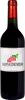
Winery Gustav Adolf SchmittSpätburgunder
 Red wine


In the mouth this red wine is a with a nice freshness.
This wine generally goes well with poultry, beef or veal.
Taste structure of the Spätburgunder from the Winery Gustav Adolf Schmitt
Light | Bold | |
Smooth | Tannic | |
Dry | Sweet | |
Soft | Acidic |
In the mouth the Spätburgunder of Winery Gustav Adolf Schmitt in the region of Rheinhessen is a with a nice freshness.
Food and wine pairings with Spätburgunder
Pairings that work perfectly with Spätburgunder



Original food and wine pairings with Spätburgunder

The Spätburgunder of Winery Gustav Adolf Schmitt matches generally quite well with dishes of beef, veal or game (deer, venison) such as recipes of greek moussaka, casserons in the country style or leg of wild boar.
Details and technical informations about Winery Gustav Adolf Schmitt's Spätburgunder.
Discover the grape variety: Aspiran
Aspiran is a grape variety whose first traces go back to Gallo-Roman times. Originally from the Languedoc region, it is not very common nowadays. It has many alternative names, including verdal, ribeyrenc and riveyrenc. The vine, which is more or less upright, has average vigor. The ripening of the second late period allows the picking of compact, winged, conical bunches of medium size. The berries are protected by a resistant, albeit thin, skin, which is distinguished by its plum-colored hue, but can also appear pink, gray or white. The flesh is delicious with its spicy and sweet taste and is rich in juice. When vinified, it gives a product with a delicate colour, slightly perfumed and fine in the mouth. Although it does not fear arid and rocky soils, Aspiran is sensitive to winter frosts.
Last vintages of this wine
The best vintages of Spätburgunder from Winery Gustav Adolf Schmitt are 0
Informations about the Winery Gustav Adolf Schmitt
The Winery Gustav Adolf Schmitt is one of of the world's great estates. It offers 37 wines for sale in the of Rheinhessen to come and discover on site or to buy online.

The wine region of Rheinhessen
Rheinhessen is Germany's largest region for producing the quality wines of the Qualitätswein bestimmter Anbaugebiete (QbA) and Prädikatswein designations, with roughly 26,500 hectares (65,000 acres) of Vineyard">Vineyards as of 2014. Many of its most significant viticultural areas are favorably influenced by the Rhine river, which runs aLong its North and eastern borders. The Rhine, along with the Nahe river to the west and the Haardt mountains to its South, form a natural border. Rheinhessen covers an area south of Rheingau, north of Pfalz and east of Nahe, and is located within the Rhineland-Palatinate federal state.
The word of the wine: Cryo-extraction
This technique was very popular at the end of the 80's in Sauternes, a little less so now. The grapes are frozen before pressing, and the water transformed into ice remains in the marc, only the sugar flows out. As with the concentrators, the "cryo" can also increase bad taste and greenness.