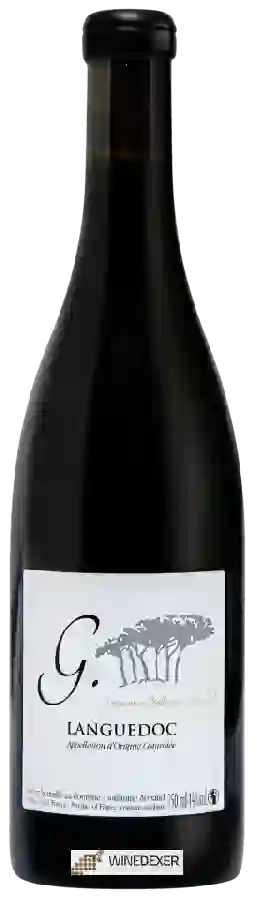
Domaine Guillaume ArmandG. Sommières
 Red wine


This wine generally goes well with beef, veal or pasta.

Food and wine pairings with G. Sommières
Pairings that work perfectly with G. Sommières



Original food and wine pairings with G. Sommières
The G. Sommières of Domaine Guillaume Armand matches generally quite well with dishes of beef, pasta or veal such as recipes of small stuffed fish from nice, elodie's pasta risotto or beef tournedos with boursin.
Details and technical informations about Domaine Guillaume Armand's G. Sommières.
Discover the grape variety: Floreal
Aromatic, lively dry whites with a pale golden robe, a taut palate with fresh acidity, and signature aromas of citrus (grapefruit), white flowers, passion fruit and exotic notes. Crisp profile. Early-ripening and productive. Listed in the official catalogue, representing the future of lower-input viticulture in France through its polygenic resistance to downy and powdery mildew. French white hybrid obtained in 2018 by INRA (Resdur1 series).
Last vintages of this wine

The best vintages of G. Sommières from Domaine Guillaume Armand are 0
Informations about the Domaine Guillaume Armand
The Domaine Guillaume Armand is one of of the world's greatest estates. It offers 9 wines for sale in the of Sommières to come and discover on site or to buy online.

The wine region of Sommières
Most eastern Languedoc AOC entirely in the Gard (20 km radius west of Nîmes, Vidourle river, marl-limestone on Mediterranean garrigue, sunny mistral climate): signature Syrah (≥20%) and Grenache as leading reds (≥50% combined, ≥70% with Mourvèdre) — garrigue, thyme, rosemary, cistus and pine aromas. Carignan and Cinsault as complements, a distinctively aromatic terroir.
The wine region of Languedoc-Roussillon
Largest single French vineyard, dominated by sunny, generous reds. Spicy Syrah, candied Grenache (ripe fruit, garrigue), structured Carignan, deep Mourvèdre, supple Cinsault. Stars: structured Corbières, Minervois, Faugères, Saint-Chinian; round Côtes-du-Roussillon. Legendary vins doux naturels: Banyuls and Maury (fortified Grenache) with notes of cocoa, fig, prune.
The word of the wine: Malolactic fermentation
Called second fermentation or malo for short. It is the degradation (under the effect of bacteria) of the malic acid naturally present in the wine into milder, less aggressive lactic acid. Some producers or wineries refuse this operation by "blocking the malo" (by cold and adding SO2) to keep a maximum of acidity which carries the aromas and accentuates the sensation of freshness.