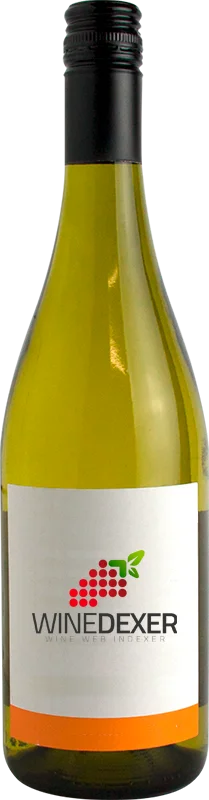
Winery GraunarPicolit
 White wine


In the mouth this white wine is a powerful.
This wine generally goes well with lean fish, shellfish or mature and hard cheese.
Taste structure of the Picolit from the Winery Graunar
Light | Bold | |
Dry | Sweet | |
Soft | Acidic |
In the mouth the Picolit of Winery Graunar in the region of Friuli-Venezia Giulia is a powerful.
Food and wine pairings with Picolit
Pairings that work perfectly with Picolit



Original food and wine pairings with Picolit


The Picolit of Winery Graunar matches generally quite well with dishes of pasta, shellfish or mature and hard cheese such as recipes of ham lasagness, spanish paella or trio salad: cabbage, ham, comté.
Details and technical informations about Winery Graunar's Picolit.
Discover the grape variety: Merzling
A cross between Seyval and FR 375-52 (Riesling x Pinot Gris or Rülander) obtained in Germany in 1960 by Johannes Zimmermann. It can be found in Denmark, Belgium, Switzerland, Lithuania, the Czech Republic, etc. In France, it is practically unknown.
Last vintages of this wine
The best vintages of Picolit from Winery Graunar are 0
Informations about the Winery Graunar
The Winery Graunar is one of of the world's greatest estates. It offers 10 wines for sale in the of Friuli-Venezia Giulia to come and discover on site or to buy online.

The wine region of Friuli-Venezia Giulia
Friuli-Venezia Giulia is an autonomous region in Italy, located in the extreme Northeast of the country, bordered by Austria and Slovenia to the north and east respectively. The eponymous wine region has four DOCGs, twelve DOCs and three PGIs and is best known for its white wine production. 77% of the region's wines are white, one of the highest proportions of any Italian region. The region's wines are distinctly different from other Italian wines in that they are made from non-traditional Grape varieties such as Sauvignon blanc, Riesling and Pinot blanc, as well as typically Italian varieties such as pinot gris and picolit.
The word of the wine: Bitter (flavor)
A flavour generally provided in wines by polyphenols and accompanied by a sensation of pungency. In small quantities, bitterness makes you salivate, gives relief to the wine and reinforces its sapidity.