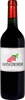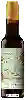
Winery GratavinumDolç d'en Piqué Priorat
 Sweet wine


In the mouth this sweet wine is a powerful mainly marked by the residual sugar.
This wine generally goes well with poultry, beef or game (deer, venison).

Taste structure of the Dolç d'en Piqué Priorat from the Winery Gratavinum
Light | Bold | |
Smooth | Tannic | |
Dry | Sweet | |
Soft | Acidic |
In the mouth the Dolç d'en Piqué Priorat of Winery Gratavinum in the region of Catalogne is a powerful mainly marked by the residual sugar.
Wine flavors and olphactive analysis




On the nose the Dolç d'en Piqué Priorat of Winery Gratavinum in the region of Catalogne often reveals types of flavors of non oak, earth or microbio and sometimes also flavors of oak, spices or red fruit.
Food and wine pairings with Dolç d'en Piqué Priorat
Pairings that work perfectly with Dolç d'en Piqué Priorat



Original food and wine pairings with Dolç d'en Piqué Priorat

The Dolç d'en Piqué Priorat of Winery Gratavinum matches generally quite well with dishes of beef, lamb or game (deer, venison) such as recipes of seven o'clock leg of lamb, chiche kebab in armenian or duck breast with spices, roasted figs with honey and port.
Details and technical informations about Winery Gratavinum's Dolç d'en Piqué Priorat.
Discover the grape variety: Cabernet-Sauvignon
Structured, tannic reds, deeply coloured, with aromas of blackcurrant, blackberry, cedar, tobacco and graphite, underpinned by firm acidity and fine ageing potential. Cornerstone of the great Médoc estates (Pauillac, Saint-Estèphe, Saint-Julien) and signature of Napa Valley, Coonawarra and Maipo. The world's most planted red variety, a natural cross of Cabernet Franc x Sauvignon Blanc born in Bordeaux.
Last vintages of this wine

The best vintages of Dolç d'en Piqué Priorat from Winery Gratavinum are 2017, 2015, 0, 2011
Informations about the Winery Gratavinum
The Winery Gratavinum is one of of the world's greatest estates. It offers 5 wines for sale in the of Priorat to come and discover on site or to buy online.

The wine region of Priorat
Mythical Catalan terroir, DOCa (Spain's summit alongside Rioja). Powerful, concentrated reds with signature notes of candied black fruits (blackberry, black cherry), graphite, schist, garrigue, cocoa and liquorice, firm tannins and a mineral palate strung by the "llicorella" (black schist and quartz forcing roots down to 20 m). Old vines of Garnacha (roundness) and Cariñena (Samsó, structure). Exceptional ageing.
The wine region of Catalogne
Cradle of Cava (~95% of Spanish output, traditional method): Macabeo, Xarel-lo, Parellada trilogy, fine fruity bubble. Quality peak in Priorat DOCa: dense, mineral reds on llicorella (schist), old-vine Garnacha and Cariñena with black fruit, garrigue notes, firm tannins. Also Penedès, fleshy Montsant, sunny Empordà, Costers del Segre. Mediterranean.
The word of the wine: Terroir
Strictly speaking, the notion of terroir corresponds to the geological characteristics of a vineyard. However, when we talk about terroir, we take into account the soil, the climate (even the microclimate), the flora, the fauna, and the human factor that characterizes the practices that make up the art of the craft.