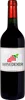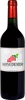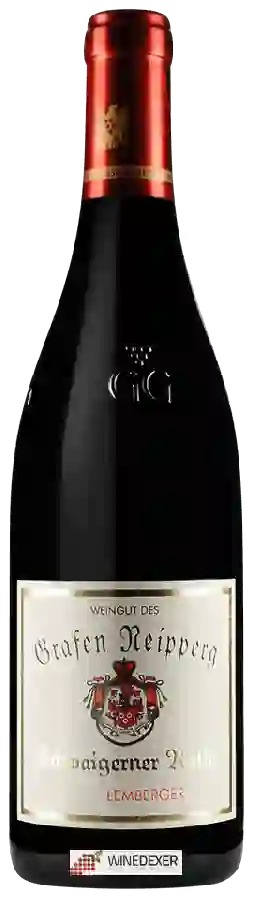
Winery Grafen NeippergSchwaigerner Ruthe Lemberger
 Red wine



This wine generally goes well with

Wine flavors and olphactive analysis



On the nose the Schwaigerner Ruthe Lemberger of Winery Grafen Neipperg in the region of Württemberg often reveals types of flavors of non oak, earth or oak and sometimes also flavors of spices, red fruit or black fruit.
Details and technical informations about Winery Grafen Neipperg's Schwaigerner Ruthe Lemberger.
Discover the grape variety: Syrah
Structured, elegant reds with deep colour, firm tannins, with intense aromas of blackberry, blackcurrant, black pepper, violet, smoked meat, black olive and balsamic notes. Fine ageing potential. Star of the great northern Rhône reds (Côte-Rôtie, Hermitage, Cornas, Saint-Joseph) and pillar of GSM blends in the south (Châteauneuf-du-Pape). Widely exported to Australia as Shiraz (Barossa, McLaren Vale). Cross of dureza × mondeuse blanche.
Last vintages of this wine
The best vintages of Schwaigerner Ruthe Lemberger from Winery Grafen Neipperg are 2015, 2013, 2016, 0 and 2012.
Informations about the Winery Grafen Neipperg
The Winery Grafen Neipperg is one of of the world's greatest estates. It offers 56 wines for sale in the of Württemberg to come and discover on site or to buy online.

The wine region of Württemberg
Rare predominantly red region in Germany (nearly 70%). Supple, fruity everyday reds: light, crisp Trollinger (Schiava) with red fruits, more structured, spicy, deep Lemberger (Blaufränkisch), generous Schwarzriesling (Pinot Meunier). Riesling king of whites (>2,000 ha), lively and mineral, citrus and green apple. Germany's 4th region (11,500 ha) on the Neckar slopes around Heilbronn and Stuttgart.
The word of the wine: Sensory analysis
Technical name of the tasting.