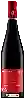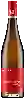
Winery Goldene GansBadischer Landwein rot Trocken
 Red wine
This wine is a blend of 2 varietals which are the Pinot noir and the Regent.
This wine generally goes well with pork, poultry or veal.

Food and wine pairings with Badischer Landwein rot Trocken
Pairings that work perfectly with Badischer Landwein rot Trocken



Original food and wine pairings with Badischer Landwein rot Trocken


The Badischer Landwein rot Trocken of Winery Goldene Gans matches generally quite well with dishes of veal, pork or game (deer, venison) such as recipes of potjevleesch (meat in a pot), chicken pie or duck and peach brochettes.
Details and technical informations about Winery Goldene Gans's Badischer Landwein rot Trocken.
Discover the grape variety: Pinot noir
Elegant reds, light in colour with silky tannins, showing strawberry, cherry and raspberry aromas, evolving to forest floor, mushroom and spice with age. Fresh acidity, delicate finish. Star of the Côte d'Or (Romanée-Conti, Chambertin, Volnay), pillar of Champagne (Blanc de Noirs) and signature of Oregon, Central Otago and Sonoma Coast. An early-ripening Burgundian variety, one of the world's greatest.
Informations about the Winery Goldene Gans
The Winery Goldene Gans is one of of the world's greatest estates. It offers 5 wines for sale in the of Baden to come and discover on site or to buy online.

The wine region of Baden
German capital of Pinot Noir (Spätburgunder): silky, fine reds with notes of red fruits, cherry, undergrowth and sweet spices, melted tannins. Round Grauburgunder (Pinot Gris), lively Weissburgunder, supple Müller-Thurgau, mineral Riesling. Germany's 3rd region (15,000 ha) in Baden-Württemberg facing Alsace, one of the country's warmest climates, volcanic soils at the Kaiserstuhl. Cradle of modern great German reds, elegant and fine.
The word of the wine: Local wine
Table wine, but with the origin indicated. It corresponds to a particular legislation: the freedom to use grape varieties is greater than for the AOC, but the quality criteria such as the approval tastings can sometimes be more demanding. The legislation is still evolving, but for the moment there are three levels: regional (e.g. Vin de Pays d'Oc), departmental and local (e.g. Côtes de Thongue).