The Winery Glades Pike of Pennsylvania
Winery Glades Pike
The winery offers 16 different wines
3.7


Note - 1Note - 1Note - 1Note - 0.5Note - 0
Its wines get an average rating of 3.7.
It is ranked in the top 88 of the estates of Pennsylvania.
It is located in Pennsylvania
Find the Winery Glades Pike on Facebook and on Twitter

The Winery Glades Pike is one of the world's great estates. It offers 16 wines for sale in of Pennsylvania to come and discover on site or to buy online.
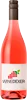
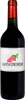
Top Winery Glades Pike wines

Looking for the best Winery Glades Pike wines in Pennsylvania among all the wines in the region? Check out our tops of the best red, white or effervescent Winery Glades Pike wines. Also find some food and wine pairings that may be suitable with the wines from this area. Learn more about the region and the Winery Glades Pike wines with technical and enological descriptions.

The top pink wines of Winery Glades Pike

Food and wine pairings with a pink wine of Winery Glades Pike

How Winery Glades Pike wines pair with each other generally quite well with dishes such as recipes .

The best vintages in the pink wines of Winery Glades Pike

  • 0With an average score of 4.10/5

Discovering the wine region of Pennsylvania

Pennsylvania is a state in the northeastern United States. It covers 119,000 km² (46,000 square miles) between Lake Erie and the Atlantic coast. Pennsylvania wines are produced from a variety of native Grape varieties such as Delaware, French-American hybrids such as Chambourcin and Seyval Blanc, and well-known vinifera varieties including Cabernet Sauvignon, Cabernet Franc and Merlot. With about 14,000 acres (5665ha) of vineyards, Pennsylvania is one of the most prolific wine-growing states in the country, along with New York, Washington and Oregon (none of these states match California's production, which accounts for about 90 percent of U.

S. wine production). ) Much of Pennsylvania's vineyards produce raisins and table grapes. As a result, the state ranks only seventh in terms of wine production.

However, the wine industry is growing rapidly; there were fewer than 30 wineries in 1980.

The top red wines of Winery Glades Pike

Food and wine pairings with a red wine of Winery Glades Pike

How Winery Glades Pike wines pair with each other generally quite well with dishes of beef, lamb or spicy food such as recipes of melt-in-the-mouth pork tenderloin casserole, canned cassoulet or tuscan linguine.

The best vintages in the red wines of Winery Glades Pike

  • 0With an average score of 3.70/5

The grape varieties most used in the red wines of Winery Glades Pike.

  • Cabernet Sauvignon
  • Concord

Discover the grape variety: Floreal

A wine grape variety of the INRA-Resdur1 series with polygenic resistance (two genes for mildew and powdery mildew have been identified), resulting from an interspecific cross between Villaris and Mtp 3159-2-12 (for the latter, one of its parents is Vitis rotundifolia, which is resistant to Pierce's disease, mildew, grey rot, etc.). Little multiplied, it is registered in the Official Catalogue of wine grape varieties list A1.

Discover other wineries and winemakers neighboring the Winery Glades Pike

Planning a wine route in the of Pennsylvania? Here are the wineries to visit and the winemakers to meet during your trip in search of wines similar to Winery Glades Pike.

Discover the grape variety: Concord

It is the result of a seedling planted in the United States, around 1840, recovered near the Concord River, a small river located east of Massachusetts. According to genetic analysis, it is an interspecific cross between the catawba and a vitis labrusca. Concord was for a long time the main variety cultivated in North America. It was introduced into Europe at the beginning of the 19th century, in France at the beginning of the phylloxera crisis, but was not widely propagated. It could be found in the Valleraugue region (Gard) at the foot of Mont Aigoual, in the Ardèche (our photos), etc. Today, it exists only as an isolated strain that can sometimes be found on the edge of a slope, which was our case. Through various and numerous crosses, it has been used to obtain some rootstocks and direct producer hybrids, which have now almost all disappeared.