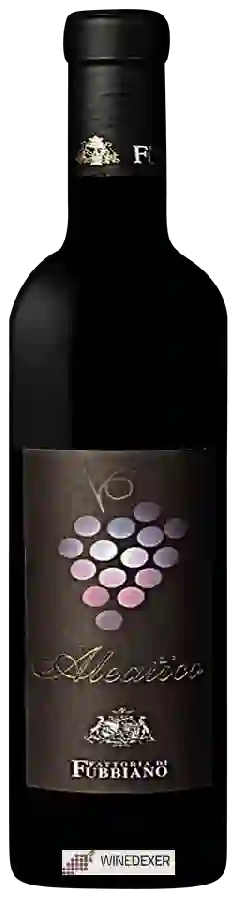
Winery FubbianoAleatico
 Sweet wine


This wine generally goes well with

Wine flavors and olphactive analysis

On the nose the Aleatico of Winery Fubbiano in the region of Tuscany often reveals types of flavors of oak, black fruit.
Details and technical informations about Winery Fubbiano's Aleatico.
Discover the grape variety: Aléatico
Aromatic, sweet reds with a light ruby robe, fine tannins and a luscious palate. Intense, refined aromas of rose, wild strawberry, raspberry, candied cherry, delicate muscat and soft spices. Often vinified as passito, sweet or fortified by drying; rarely as dry reds. Star of Elba Aleatico Passito DOCG and Aleatico di Gradoli DOC in Lazio, also present in Puglia. Native Italian variety, related to Muscat Blanc à Petits Grains.
Last vintages of this wine
The best vintages of Aleatico from Winery Fubbiano are 0
Informations about the Winery Fubbiano
The Winery Fubbiano is one of of the world's greatest estates. It offers 15 wines for sale in the of Costa Toscana to come and discover on site or to buy online.

The wine region of Costa Toscana
IGT of the Tyrrhenian Tuscan coast (Maremma, Bolgheri, Livorno), sandy and stony soils, sunny maritime climate. Signature Vermentino as white king: aromatic and fresh with citrus, orange blossom, white peach, Mediterranean herbs, almond and saline iodine touch, taut palate. Super-Tuscan reds of Bordeaux blends: Cabernet, Merlot, Petit Verdot and Cabernet Franc, dense (blackcurrant, blackberry, cedar, tobacco). Solar iodine style.
The wine region of Tuscany
Kingdom of Sangiovese: upright reds with cherry, plum, dried herbs and leather, lively acidity and firm tannins. Fleshy, food-friendly Chianti Classico DOCG, deep long-ageing Brunello di Montalcino (spice, tobacco, ripe black fruit), elegant Vino Nobile di Montepulciano. On the coast, Bolgheri crafts the opulent Cabernet- and Merlot-based 'Super Tuscans'. Some fresh white Vernaccia.
The word of the wine: Viscosity
Consistency of wine reminiscent of the tactile sensation of sugar syrup with varying degrees of fluidity, due to the alcohol and natural sugar in the grapes present in sweet wines. In excess, this sensation can make the wine pasty and heavy. To the eye, viscosity is referred to as tears.