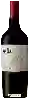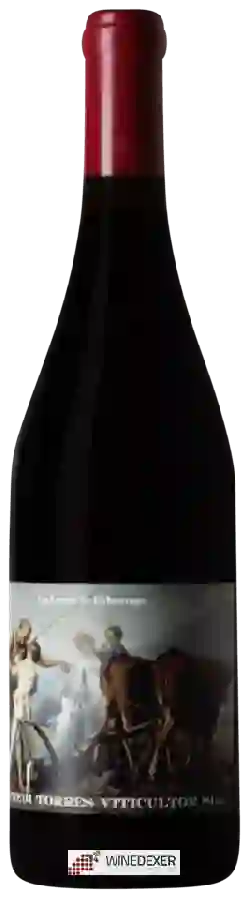
Winery Fredi TorresLa Leçon de Labourage
 Red wine


In the mouth this red wine is a powerful.
This wine generally goes well with poultry, beef or veal.

Taste structure of the La Leçon de Labourage from the Winery Fredi Torres
Light | Bold | |
Smooth | Tannic | |
Dry | Sweet | |
Soft | Acidic |
In the mouth the La Leçon de Labourage of Winery Fredi Torres in the region of Catalogne is a powerful.
Food and wine pairings with La Leçon de Labourage
Pairings that work perfectly with La Leçon de Labourage



Original food and wine pairings with La Leçon de Labourage

The La Leçon de Labourage of Winery Fredi Torres matches generally quite well with dishes of beef, pasta or veal such as recipes of roast beef with pepper, pasta with peas and bacon or paupiettes in a casserole with cream.
Details and technical informations about Winery Fredi Torres's La Leçon de Labourage.
Discover the grape variety: Danuta
Simple, fresh dry whites with a pale golden colour, supple palate with moderate acidity, undemonstrative aromas of citrus and white flowers. Productive. Grown in small quantities in central Europe for sustainably managed vineyards and hobby growers, mainly used for fresh consumption and organic viticulture. White hybrid variety bred through complex crossing for disease resistance.
Last vintages of this wine
The best vintages of La Leçon de Labourage from Winery Fredi Torres are 0
Informations about the Winery Fredi Torres
The Winery Fredi Torres is one of of the world's greatest estates. It offers 5 wines for sale in the of Catalogne to come and discover on site or to buy online.

The wine region of Catalogne
Cradle of Cava (~95% of Spanish output, traditional method): Macabeo, Xarel-lo, Parellada trilogy, fine fruity bubble. Quality peak in Priorat DOCa: dense, mineral reds on llicorella (schist), old-vine Garnacha and Cariñena with black fruit, garrigue notes, firm tannins. Also Penedès, fleshy Montsant, sunny Empordà, Costers del Segre. Mediterranean.
The word of the wine: Effervescent
Any wine loaded with CO2 (carbon dioxide), which is revealed in the form of bubbles, reinforcing the freshness effect in the mouth. This gas production is the result of what is called the second fermentation in the bottle. It occurs in champagnes and sparkling wines such as crémants.