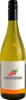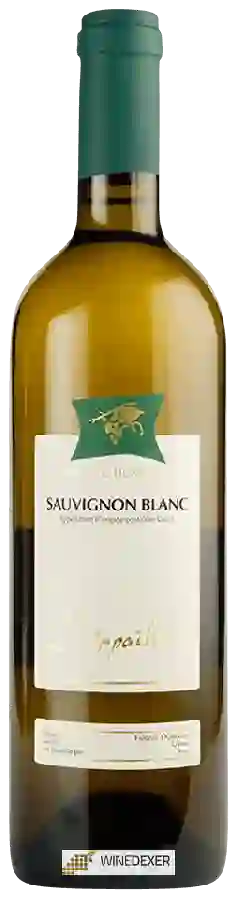
Winery L'Orpailleur Frédéric DumoulinSauvignon Blanc
 White wine



This wine generally goes well with vegetarian, rich fish (salmon, tuna etc) or shellfish.

Wine flavors and olphactive analysis


On the nose the Sauvignon Blanc of Winery L'Orpailleur Frédéric Dumoulin in the region of Valais often reveals types of flavors of earth.
Food and wine pairings with Sauvignon Blanc
Pairings that work perfectly with Sauvignon Blanc



Original food and wine pairings with Sauvignon Blanc
The Sauvignon Blanc of Winery L'Orpailleur Frédéric Dumoulin matches generally quite well with dishes of rich fish (salmon, tuna etc), shellfish or vegetarian such as recipes of risotto with fresh salmon and zucchini, marmite dieppoise or quiche with bacon and gruyère cheese.
Details and technical informations about Winery L'Orpailleur Frédéric Dumoulin's Sauvignon Blanc.
Discover the grape variety: Findling
Aromatic, supple whites with a pale golden robe, an ample palate with moderate acidity, and signature muscat aromas of white flowers (elderflower), yellow fruits (peach) and riper notes than its parent Müller-Thurgau. Accessible and fruity profile. Grown on a few hectares in Rhineland-Palatinate for local cuvées. A mutation of Müller-Thurgau obtained in 1934 in Germany, with smaller bunches and earlier ripening.
Last vintages of this wine
The best vintages of Sauvignon Blanc from Winery L'Orpailleur Frédéric Dumoulin are 2014, 0
Informations about the Winery L'Orpailleur Frédéric Dumoulin
The Winery L'Orpailleur Frédéric Dumoulin is one of of the world's great estates. It offers 32 wines for sale in the of Valais to come and discover on site or to buy online.

The wine region of Valais
Switzerland's largest vineyard, capital of native grapes. Straight, precise alpine whites: light, floral Chasselas (Fendant), signature Petite Arvine with saline, grapefruit and rhubarb notes, rich, apricoty Amigne, mineral Humagne Blanche. Altitude reds: fine Pinot Noir, crisp Gamay, native Cornalin and Humagne Rouge, spicy and deep. Highly precise alpine age-worthy wines.
The word of the wine: Maceration
Prolonged contact and exchange between the juice and the grape solids, especially the skin. Not to be confused with the time of fermentation, which follows maceration. The juice becomes loaded with colouring matter and tannins, and acquires aromas. For a rosé, the maceration is short so that the colour does not "rise" too much. For white wines too, a "pellicular maceration" can be practised, which allows the wine to acquire more fat.