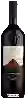
Winery Franco AmorosoPinot Grigio
 White wine
In the mouth this white wine is a .
This wine generally goes well with vegetarian, shellfish or mushrooms.
Taste structure of the Pinot Grigio from the Winery Franco Amoroso
Light | Bold | |
Dry | Sweet | |
Soft | Acidic |
In the mouth the Pinot Grigio of Winery Franco Amoroso in the region of Veneto is a .
Food and wine pairings with Pinot Grigio
Pairings that work perfectly with Pinot Grigio



Original food and wine pairings with Pinot Grigio

The Pinot Grigio of Winery Franco Amoroso matches generally quite well with dishes of shellfish, vegetarian or mushrooms such as recipes of shrimp and zucchini with curry and coconut milk, light tuna-tomato quiche (without cream) or beef stroganoff.
Details and technical informations about Winery Franco Amoroso's Pinot Grigio.
Discover the grape variety: Johanniter
An interspecific cross between Riesling and FR 589-54 (Seyve-Villard 12481 x (pinot gris or rülander x chasselas or gutedel)) obtained in Germany in 1968 by Johannes Zimmermann. It has the particularity of having only one gene for resistance to mildew and powdery mildew. This variety can be found in Germany, Belgium, Switzerland, the Netherlands, etc. In France, it is practically unknown. Note that the "Johanniter" grape variety is a protected trademark.
Informations about the Winery Franco Amoroso
The Winery Franco Amoroso is one of of the world's great estates. It offers 13 wines for sale in the of Veneto to come and discover on site or to buy online.

The wine region of Veneto
Veneto is an important and growing wine region in northeastern Italy. Veneto is administratively Part of the Triveneto area, aLong with its smaller neighbors, Trentino-Alto Adige and Friuli-Venezia Giulia. In terms of geography, culture and wine styles, it represents a transition from the Alpine and Germanic-Slavic end of Italy to the warmer, drier, more Roman lands to the South. Veneto is slightly smaller than the other major Italian wine regions - Piedmont, Tuscany, Lombardy, Puglia and Sicily - but it produces more wine than any of them.
The word of the wine: Hairy Grenache
See lledoner pelut.