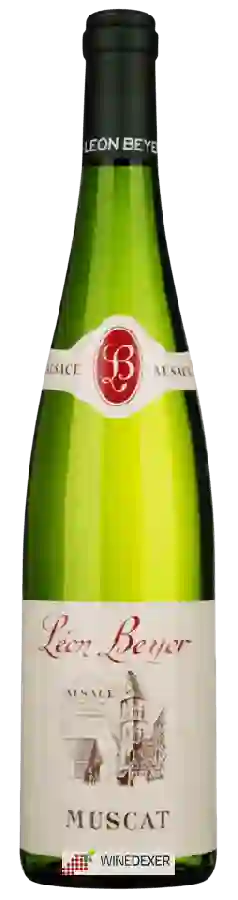
Winery Leon BeyerMuscat
 White wine



This wine generally goes well with spicy food and sweet desserts.
Wine flavors and olphactive analysis

Food and wine pairings with Muscat
Pairings that work perfectly with Muscat


Original food and wine pairings with Muscat
The Muscat of Winery Leon Beyer matches generally quite well with dishes of spicy food or sweet desserts such as recipes of lamb curry indian style or real chocolate cake.
Details and technical informations about Winery Leon Beyer's Muscat.
Discover the grape variety: Dolcetto nero
An Italian variety that is very present in Piedmont, it is also found in Argentina and France, where it is registered in the Official Catalogue of Wine Grape Varieties, list A1. Dolcetto nero would be the sweet black one. However, the one we encountered, both at Daumas-Gassac in Aniane in the Hérault and at Pouzols-Minervois in the Aude, does not have the same ampelographic characteristics: the first difference is that the petiolar point and the veins are wine red and not green like those of the douce noire.
Last vintages of this wine
The best vintages of Muscat from Winery Leon Beyer are 2015, 2014, 2013
Informations about the Winery Leon Beyer
The Winery Leon Beyer is one of of the world's great estates. It offers 39 wines for sale in the of Alsace to come and discover on site or to buy online.

The wine region of Alsace
Alsace, located in the extreme north-east of France, is Distinguished from other French wine regions by its strong Franco-Germanic influences. These influences are the result of a back-and-forth between the German and French sovereignties over the last few centuries. They can be seen not only in the architecture and culture of Alsace, but also in the wines. Alsace wines are produced under three main appellations: Alsace and Alsace Grand Cru for still white wines (Sweet and Dry), and Crémant d'Alsace for Sparkling wines.
The word of the wine: Maceration
Prolonged contact and exchange between the juice and the grape solids, especially the skin. Not to be confused with the time of fermentation, which follows maceration. The juice becomes loaded with colouring matter and tannins, and acquires aromas. For a rosé, the maceration is short so that the colour does not "rise" too much. For white wines too, a "pellicular maceration" can be practised, which allows the wine to acquire more fat.