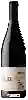
Winery La VisonièreMinervois Rouge
 Pink wine


This wine generally goes well with beef, veal or pasta.
Food and wine pairings with Minervois Rouge
Pairings that work perfectly with Minervois Rouge



Original food and wine pairings with Minervois Rouge
The Minervois Rouge of Winery La Visonière matches generally quite well with dishes of beef, pasta or veal such as recipes of pot roast, leek and salmon lasagna or sarthe pot.
Details and technical informations about Winery La Visonière's Minervois Rouge.
Discover the grape variety: Clinton
A natural hybrid, most likely resulting from an interspecific cross between Vitis Riparia and Vitis Labrusca, first planted by Hugh White in College Hill, USA. In France, it is one of the six hybrids prohibited since 1935 (included in European regulations): Clinton, herbemont, isabelle, jacquez, noah and othello. It should be noted that it was used for a very long time as a rootstock, today it can still be found in arbors and trellises raised in private homes, our photographs were taken in the Cevennes.
Informations about the Winery La Visonière
The Winery La Visonière is one of of the world's greatest estates. It offers 6 wines for sale in the of Minervois to come and discover on site or to buy online.

The wine region of Minervois
Minervois is an appellation for distinctive red wines from the western Languedoc region of France. In general, they are softer than those produced in the Corbières, just to the South. The Minervois appellation also covers rosé and white wines. The predominant Grape varieties used in AOC Minervois wines are Grenache, Syrah and Mourvèdre.
The wine region of Languedoc-Roussillon
Languedoc (formerly Coteaux du Languedoc) is a key appellation used in the Languedoc-Roussillon wine region of southern France. It covers Dry table wines of all three colors (red, white and rosé) from the entire region, but leaves Sweet and Sparkling wines to other more specialized appellations. About 75% of all Languedoc wines are red, with the remaining 25% split roughly down the middle between whites and rosés. The appellation covers most of the Languedoc region and almost a third of all the vineyards in France.
The word of the wine: Claret
Name given by the English to the red wine of Bordeaux.