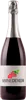
Domaine Le Clos de BellevueCuvée Vieilles Vignes Muscat de Lunel
 Natural sweet wine


This wine generally goes well with spicy food and sweet desserts.
Food and wine pairings with Cuvée Vieilles Vignes Muscat de Lunel
Pairings that work perfectly with Cuvée Vieilles Vignes Muscat de Lunel


Original food and wine pairings with Cuvée Vieilles Vignes Muscat de Lunel
The Cuvée Vieilles Vignes Muscat de Lunel of Domaine Le Clos de Bellevue matches generally quite well with dishes of spicy food or sweet desserts such as recipes of risotto milanese or rice with milk.
Details and technical informations about Domaine Le Clos de Bellevue's Cuvée Vieilles Vignes Muscat de Lunel.
Discover the grape variety: Perdéa
Perdea blanc is a grape variety that originated in France (Languedoc). It produces a variety of grape specially used for wine making. It is rare to find this grape to eat on our tables. This variety of grape is characterized by large bunches and small to medium sized grapes. Perdea blanc can be found in several vineyards: South-West, Cognac, Bordeaux, Provence & Corsica, Rhone valley, Languedoc & Roussillon, Loire valley, Savoie & Bugey, Beaujolais, Armagnac.
Informations about the Domaine Le Clos de Bellevue
The Domaine Le Clos de Bellevue is one of of the world's greatest estates. It offers 11 wines for sale in the of Muscat de Lunel to come and discover on site or to buy online.

The wine region of Muscat de Lunel
Muscat de Lunel is an appellation for the naturally Sweet wines of the town of Lunel, on the eastern edge of the Languedoc region in Southern France. As the name suggests, these wines are made from one of the many varieties of Muscat Grapes - in this case, Muscat Blanc à Petits Grains. The grapes must have a sugar content of 252 grams per litre. Wine Alcohol is added to the grape must in a ratio of between 10:1 and 20:1.
The wine region of Languedoc-Roussillon
Languedoc (formerly Coteaux du Languedoc) is a key appellation used in the Languedoc-Roussillon wine region of southern France. It covers Dry table wines of all three colors (red, white and rosé) from the entire region, but leaves Sweet and Sparkling wines to other more specialized appellations. About 75% of all Languedoc wines are red, with the remaining 25% split roughly down the middle between whites and rosés. The appellation covers most of the Languedoc region and almost a third of all the vineyards in France.
The word of the wine: Côte des Blancs
One of the most famous terroirs of the Champagne region, from Épernay to Vertus, mainly devoted to Chardonnay, hence its name. The villages of Chouilly, Cramant, Cuis, Mesnil-sur-Oger, Avize, etc., lying on the chalk, are in a way to Champagne what Meursault, Chablis and Puligny are to Burgundy.