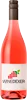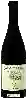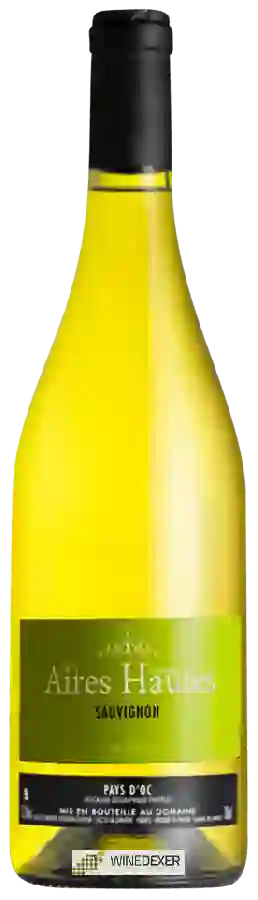
Domaine des Aires HautesSauvignon
 White wine



In the mouth this white wine is a powerful.
This wine generally goes well with vegetarian, poultry or lean fish.

Taste structure of the Sauvignon from the Domaine des Aires Hautes
Light | Bold | |
Dry | Sweet | |
Soft | Acidic |
In the mouth the Sauvignon of Domaine des Aires Hautes in the region of Languedoc-Roussillon is a powerful.
Wine flavors and olphactive analysis

Food and wine pairings with Sauvignon
Pairings that work perfectly with Sauvignon



Original food and wine pairings with Sauvignon


The Sauvignon of Domaine des Aires Hautes matches generally quite well with dishes of pasta, vegetarian or poultry such as recipes of spaghetti with salmon, quiche without pastry, courgette and blue cheese or clafoutis with bush and courgettes.
Details and technical informations about Domaine des Aires Hautes's Sauvignon.
Discover the grape variety: Albarin Blanco
Lively, aromatic whites with a pale golden colour and an airy palate; signature aromas of white flowers, citrus (lemon, grapefruit), white-fleshed fruits (pear) and fresh herbal notes. Rediscovered quality potential. Star of Vinos de la Tierra de Cangas (Asturias) and present in DO Tierra de León, showcasing promising whites from north-west Iberia. Indigenous Spanish white grape, nearly extinct then rediscovered in the 1980s.
Last vintages of this wine
The best vintages of Sauvignon from Domaine des Aires Hautes are 2014, 2017, 2015, 2013
Informations about the Domaine des Aires Hautes
The Domaine des Aires Hautes is one of of the world's greatest estates. It offers 18 wines for sale in the of Languedoc-Roussillon to come and discover on site or to buy online.

The wine region of Languedoc-Roussillon
Largest single French vineyard, dominated by sunny, generous reds. Spicy Syrah, candied Grenache (ripe fruit, garrigue), structured Carignan, deep Mourvèdre, supple Cinsault. Stars: structured Corbières, Minervois, Faugères, Saint-Chinian; round Côtes-du-Roussillon. Legendary vins doux naturels: Banyuls and Maury (fortified Grenache) with notes of cocoa, fig, prune.
The word of the wine: Marie-jeanne (or double magnum)
Bottle with a capacity of 3 litres.