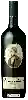
Château Beau-villageMedoc
 Red wine


In the mouth this red wine is a powerful with a nice balance between acidity and tannins.
This wine generally goes well with poultry, beef or game (deer, venison).
Taste structure of the Medoc from the Château Beau-village
Light | Bold | |
Smooth | Tannic | |
Dry | Sweet | |
Soft | Acidic |
In the mouth the Medoc of Château Beau-village in the region of Bordeaux is a powerful with a nice balance between acidity and tannins.
Food and wine pairings with Medoc
Pairings that work perfectly with Medoc



Original food and wine pairings with Medoc

The Medoc of Château Beau-village matches generally quite well with dishes of beef, lamb or game (deer, venison) such as recipes of roast beef in a crust (onions & mustard), greek-style shepherd's pie or prime rib with chervil butter.
Details and technical informations about Château Beau-village's Medoc.
Discover the grape variety: Négret castrais
The négret castrais is called mauzac noir. It is in the region of Toulouse that we find this variety doomed to disappear. Its origins are to be found in the Gaillac region, where it reaches maturity during the second period. The plant likes clay-limestone soils. It can be recognized by its late buds. Its bunches have short peduncles bearing compact, truncated cone-shaped loads. They are often winged and loaded with medium-sized berries. The pulp is covered with a thick skin whose colour is more or less red depending on the sun exposure of the bunch. Worms, excoliosis and powdery mildew are the main enemies of this variety. When vinified, Castres Negret gives off a fairly good character from its mauzac stock. The wine gives off notes of vanilla, apple, pear and jasmine. The juice is not very colourful and light in the mouth.
Informations about the Château Beau-village
The Château Beau-village is one of of the world's greatest estates. It offers 3 wines for sale in the of Médoc to come and discover on site or to buy online.

The wine region of Médoc
Bordeaux's Médoc is an area of coastal lagoons, sand dunes and pine forests located on the 45th parallel. It is also a global wine powerhouse, and home to four of the world's most prestigious wine villages: Pauillac, Margaux, Saint-Estèphe and Saint-Julien. The estates located in these villages produce some of the most expensive bottles in the world. The region has also provided all but one of the châteaux included in the official 1855 Bordeaux wine classification (Haut-Brion).
The wine region of Bordeaux
Bordeaux, in southwestern France, is one of the most famous, prestigious and prolific wine regions in the world. The majority of Bordeaux wines (nearly 90% of the production Volume) are the Dry, medium and Full-bodied red Bordeaux blends for which it is famous. The finest (and most expensive) are the wines of the great châteaux of Haut-Médoc and the right bank appellations of Saint-Émilion and Pomerol. The former focuses (at the highest level) on Cabernet Sauvignon, the latter on Merlot.
The word of the wine: Cinsault
Cinsault is a southern black grape variety that can be found in the blends of most Mediterranean appellations, but most often as an accessory grape variety. It is undoubtedly most present in certain rosé wines (in Corbières, Côtes-de-Provence, etc.): it gives these wines highly appreciated aromas of strawberry, peach and raspberry. In vin de pays (IGP), it is often vinified on its own, usually as a rosé.