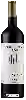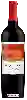
Winery Four Sisters RanchLeakule Red
 Red wine
In the mouth this red wine is a powerful with a nice balance between acidity and tannins.
This wine generally goes well with poultry, beef or veal.
Taste structure of the Leakule Red from the Winery Four Sisters Ranch
Light | Bold | |
Smooth | Tannic | |
Dry | Sweet | |
Soft | Acidic |
In the mouth the Leakule Red of Winery Four Sisters Ranch in the region of California is a powerful with a nice balance between acidity and tannins.
Food and wine pairings with Leakule Red
Pairings that work perfectly with Leakule Red



Original food and wine pairings with Leakule Red

The Leakule Red of Winery Four Sisters Ranch matches generally quite well with dishes of beef, lamb or veal such as recipes of sloth pork loin, moussaka with spices or express veal stew in a pressure cooker.
Details and technical informations about Winery Four Sisters Ranch's Leakule Red.
Discover the grape variety: Kadarka
Some say that it originated in Hungary, while others say it came from Turkey via Bulgaria. Known in Austria and more generally in Eastern Europe (Albania, Croatia, Moldavia, Slovakia, Romania, Serbia, etc.), it is registered in the Official Catalogue of Wine Grape Varieties, list A1.
Informations about the Winery Four Sisters Ranch
The Winery Four Sisters Ranch is one of of the world's great estates. It offers 25 wines for sale in the of Paso Robles to come and discover on site or to buy online.

The wine region of Paso Robles
The wine region of Paso Robles is located in the region of San Luis Obispo County of California of United States. We currently count 940 estates and châteaux in the of Paso Robles, producing 3510 different wines in conventional, organic and biodynamic agriculture. The wines of Paso Robles go well with generally quite well with dishes .
The wine region of California
California is the largest and most important wine region in the United States. It represents the southern two-thirds (850 miles or 1,370 kilometers) of the country's west coast. (Oregon and Washington make up the rest. ) The state also spans nearly 10 degrees of latitude.
The word of the wine: Smell
A generic term for both unpleasant and pleasant odours known as perfumes. In the world of tasting, the term aroma is more commonly used.