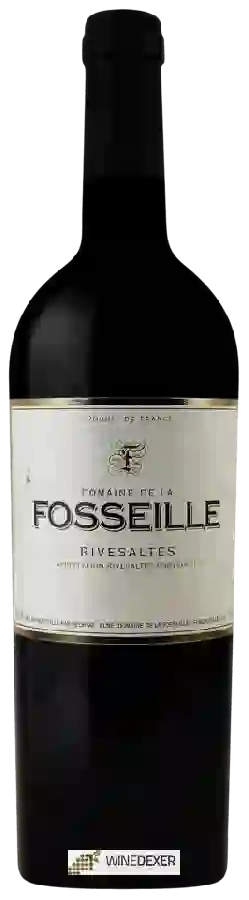
Domaine de la FosseilleRivesaltes
 Sweet wine


This wine generally goes well with spicy food and sweet desserts.
The Rivesaltes of the Domaine de la Fosseille is in the top 90 of wines of Rivesaltes.
Food and wine pairings with Rivesaltes
Pairings that work perfectly with Rivesaltes


Original food and wine pairings with Rivesaltes
The Rivesaltes of Domaine de la Fosseille matches generally quite well with dishes of spicy food or sweet desserts such as recipes of mutton stew with potatoes and garlic or tiramisu (original recipe).
Details and technical informations about Domaine de la Fosseille's Rivesaltes.
Discover the grape variety: Marsanne
Marsanne is a white grape variety that originated in Montélimar in the Drôme, several centuries ago. Marsanne is also found in Cassis, Savoie, Languedoc-Roussillon and Saint-Péray in the Ardèche, where it produces remarkable sparkling wines. The warm, sunny climate of the Rhone Valley, Languedoc-Roussillon and Provence, as well as the dry, stony soil, are ideal conditions for its development. Its bunches are quite large and provide small, juicy berries that are sensitive to grey rot and strong winds. These two grape varieties complement each other perfectly: together they give light wines with little acidity, aromas of yellow fruit, white fruit and flowers with notes of honey and liquorice. This is for example what the appellations Saint-Péray, Hermitage, Crozes-Hermitage, Saint-Joseph, Côtes-du-Vallée du Rhône, Corbières, or Cassis express... which represent about 700 hectares.
Informations about the Domaine de la Fosseille
The Domaine de la Fosseille is one of of the world's greatest estates. It offers 1 wines for sale in the of Rivesaltes to come and discover on site or to buy online.

The wine region of Rivesaltes
Rivesaltes is an appellation for the historic Sweet wines of eastern Roussillon, in the DeepSouth of France. The natural sweet wines produced in this region have been revered since at least the 14th century. The technique used to make them is one of many techniques used for sweet wines. Unlike botrytized wines or ice wines, natural sweet wines are made by Mutage, a process that involves stopping the Fermentation of the must while a high level of natural sweetness remains.
The wine region of Languedoc-Roussillon
Languedoc (formerly Coteaux du Languedoc) is a key appellation used in the Languedoc-Roussillon wine region of southern France. It covers Dry table wines of all three colors (red, white and rosé) from the entire region, but leaves Sweet and Sparkling wines to other more specialized appellations. About 75% of all Languedoc wines are red, with the remaining 25% split roughly down the middle between whites and rosés. The appellation covers most of the Languedoc region and almost a third of all the vineyards in France.
The word of the wine: Draft liquor (champagne)
After blending, the wine is bottled with a liqueur de tirage (a mixture of sugar and wine) and a yeast (selected yeasts). The yeast attacks the sugar and creates carbon dioxide. The fermentation, which lasts about two months, is prolonged by an ageing period (15 months minimum in total). The bottle is capped (some rare vintages are capped with a staple and a cork).