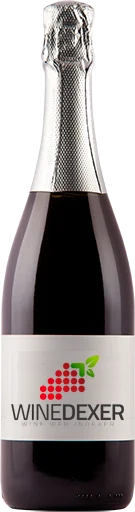
Winery 47 Anno DominiI Blanc Gran Cuvée
 Sparkling wine



This wine generally goes well with
Details and technical informations about Winery 47 Anno Domini's I Blanc Gran Cuvée.
Discover the grape variety: Baroque
From a morphological point of view, Baroque seems to have common origins with Tannat. Still called Blanc Bordelais, this white grape variety is distinguished essentially by the characteristics of its leaves. Those that are still young are both yellowish and downy. Their bumps have a somewhat bronzed appearance. The adult leaves have angular teeth. The leaves are not very three-lobed and have a pubescent, downy blade. The Baroque is grown in the Adour basin, mainly in Tursan and in certain vineyards in the Gers. Its production area is therefore not very large. This grape variety manages to resist oidium, unlike other varieties, and its harvest must be well done and free of rot. The harvest must be well done and free of rot, which leads to a better result and a more successful wine production. Moreover, the development of Baroque must be slowed down in time, bearing in mind that this type of grape variety only matures about twenty days after Chasselas.
Last vintages of this wine
The best vintages of I Blanc Gran Cuvée from Winery 47 Anno Domini are 2016, 0
Informations about the Winery 47 Anno Domini
The Winery 47 Anno Domini is one of of the world's great estates. It offers 53 wines for sale in the of Veneto to come and discover on site or to buy online.

The wine region of Veneto
Veneto is an important and growing wine region in northeastern Italy. Veneto is administratively Part of the Triveneto area, aLong with its smaller neighbors, Trentino-Alto Adige and Friuli-Venezia Giulia. In terms of geography, culture and wine styles, it represents a transition from the Alpine and Germanic-Slavic end of Italy to the warmer, drier, more Roman lands to the South. Veneto is slightly smaller than the other major Italian wine regions - Piedmont, Tuscany, Lombardy, Puglia and Sicily - but it produces more wine than any of them.
The word of the wine: Maturing (champagne)
After riddling, the bottles are stored on "point", upside down, with the neck of one bottle in the bottom of the other. The duration of this maturation is very important: in contact with the dead yeasts, the wine takes on subtle aromas and gains in roundness and fatness. A brut without year must remain at least 15 months in the cellar after bottling, a vintage 36 months.