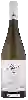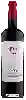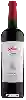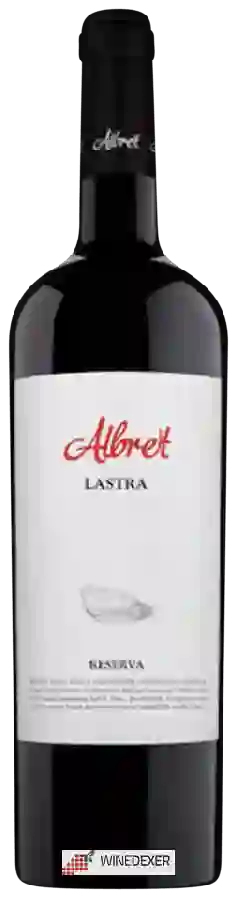
Winery Finca AlbretLastra Reserva
 Red wine



This wine is a blend of 2 varietals which are the Tempranillo and the Merlot.
In the mouth this red wine is a powerful.
This wine generally goes well with poultry, beef or veal.

Taste structure of the Lastra Reserva from the Winery Finca Albret
Light | Bold | |
Smooth | Tannic | |
Dry | Sweet | |
Soft | Acidic |
In the mouth the Lastra Reserva of Winery Finca Albret in the region of Navarre is a powerful.
Food and wine pairings with Lastra Reserva
Pairings that work perfectly with Lastra Reserva



Original food and wine pairings with Lastra Reserva

The Lastra Reserva of Winery Finca Albret matches generally quite well with dishes of beef, pasta or veal such as recipes of small stuffed fish from nice, awara broth or veal cutlets parmigiana.
Details and technical informations about Winery Finca Albret's Lastra Reserva.
Discover the grape variety: Tempranillo
Elegant, structured reds with aromas of strawberry, cherry, plum, leather, blond tobacco and pronounced vanilla from long oak ageing. Ranges from Joven to Crianza, Reserva and Gran Reserva. Star of Rioja DOCa, Ribera del Duero DO and Toro DO, also shines in the Douro as Tinta Roriz/Aragonez. One of the world's most planted Spanish varieties.
Last vintages of this wine
The best vintages of Lastra Reserva from Winery Finca Albret are 2014, 0
Informations about the Winery Finca Albret
The Winery Finca Albret is one of of the world's greatest estates. It offers 12 wines for sale in the of Navarre to come and discover on site or to buy online.

The wine region of Navarre
Spanish reference for great Garnacha rosés: raspberry-pink colour, notes of crushed strawberry, cherry, citrus and white flowers, dry and gourmet palate. The emblematic grape (~70% of reds in the past), also in supple, sun-filled reds. Tempranillo on the rise in modern blends, fine spicy Graciano, Cabernet and Merlot. Fresh Chardonnay and Viura whites.
The word of the wine: Bleeding
Old practice for red wines. As soon as the vat is filled with grapes, the tap is opened. A sweet but clear juice escapes from the vat (it can also be used to make rosé). The colour and density of the juice is enhanced, but it should not be overdone. Rarely more than 10% of the volume of a vat, otherwise you risk losing fruit and bringing in bitterness.