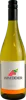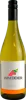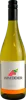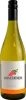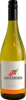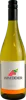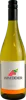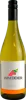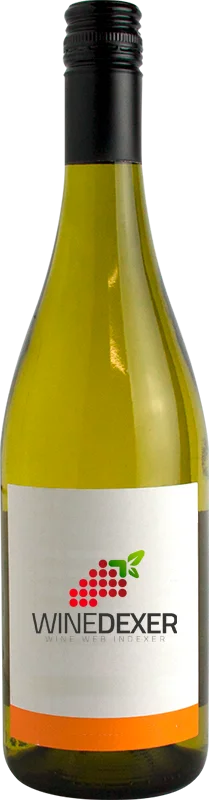
Winery PierothWeilerer Klostergarten Weissburgunder Spätlese
 White wine
This wine generally goes well with rich fish (salmon, tuna etc), shellfish or mild and soft cheese.
Food and wine pairings with Weilerer Klostergarten Weissburgunder Spätlese
Pairings that work perfectly with Weilerer Klostergarten Weissburgunder Spätlese



Original food and wine pairings with Weilerer Klostergarten Weissburgunder Spätlese

The Weilerer Klostergarten Weissburgunder Spätlese of Winery Pieroth matches generally quite well with dishes of rich fish (salmon, tuna etc), shellfish or mild and soft cheese such as recipes of quick smoked salmon croque-monsieur, periwinkles - the perfect cook! or lasagne.
Details and technical informations about Winery Pieroth's Weilerer Klostergarten Weissburgunder Spätlese.
Discover the grape variety: Villaris
Complex interspecific crossing between the sirius and the white villard obtained in 1984 by Rudolf Eibach and Reinhard Topfer at the Federal Research Center Geilweilerhof in Sielbeldingen (Germany). The Villaris can be found in Germany, the Netherlands, England, ... in France it is almost unknown.
Informations about the Winery Pieroth
The Winery Pieroth is one of of the world's great estates. It offers 791 wines for sale in the of Rheinhessen to come and discover on site or to buy online.

The wine region of Rheinhessen
Rheinhessen is Germany's largest region for producing the quality wines of the Qualitätswein bestimmter Anbaugebiete (QbA) and Prädikatswein designations, with roughly 26,500 hectares (65,000 acres) of Vineyard">Vineyards as of 2014. Many of its most significant viticultural areas are favorably influenced by the Rhine river, which runs aLong its North and eastern borders. The Rhine, along with the Nahe river to the west and the Haardt mountains to its South, form a natural border. Rheinhessen covers an area south of Rheingau, north of Pfalz and east of Nahe, and is located within the Rhineland-Palatinate federal state.
The word of the wine: Aging
Period during which a wine is kept in a cellar where it goes through different phases of evolution of its aromatic range and a maturation of its constituents (evolution of the colour, refining of the tannins, harmonization of the different flavours, etc.). The wine evolves better and less quickly in large containers, whereas it deteriorates prematurely in half-bottles.