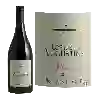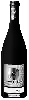
Famille Jean-Pierre Rambier - Domaine Haut-LirouMas des Costes Pic-Saint-Loup
 Red wine


This wine is a blend of 2 varietals which are the Syrah and the Grenache noir.
In the mouth this red wine is a powerful with a nice balance between acidity and tannins.
This wine generally goes well with beef, veal or pasta.
The Mas des Costes Pic-Saint-Loup of the Famille Jean-Pierre Rambier - Domaine Haut-Lirou is in the top 50 of wines of Pic-Saint-Loup.
Taste structure of the Mas des Costes Pic-Saint-Loup from the Famille Jean-Pierre Rambier - Domaine Haut-Lirou
Light | Bold | |
Smooth | Tannic | |
Dry | Sweet | |
Soft | Acidic |
In the mouth the Mas des Costes Pic-Saint-Loup of Famille Jean-Pierre Rambier - Domaine Haut-Lirou in the region of Languedoc-Roussillon is a powerful with a nice balance between acidity and tannins.
Food and wine pairings with Mas des Costes Pic-Saint-Loup
Pairings that work perfectly with Mas des Costes Pic-Saint-Loup



Original food and wine pairings with Mas des Costes Pic-Saint-Loup
The Mas des Costes Pic-Saint-Loup of Famille Jean-Pierre Rambier - Domaine Haut-Lirou matches generally quite well with dishes of beef, veal or pasta such as recipes of kamounia : tunisian beef stew, tête de veau sauce moi or chinese soy and chicken noodles (wok style).
Details and technical informations about Famille Jean-Pierre Rambier - Domaine Haut-Lirou's Mas des Costes Pic-Saint-Loup.
Discover the grape variety: Syrah
No one can agree on the origin of Syrah, the black grape variety found today in the Rhône Valley, Provence, Languedoc-Roussillon and southwestern France. Several legends speak of its possible origin in Sicily, Persia or Syria. Tests have finally revealed that it originated in the northern Côtes du Rhône valley. Syrah is a fragile grape variety, which fears drought and is susceptible to disease. Its long shoots are not very resistant to the mistral, which is why they are often tied up or cut short. It needs soil rich in trace elements to feed itself. In these conditions, it produces bunches of beautiful bluish-black grapes with medium-sized berries and sweet, spicy juice. Its red wines are deep in colour, with fruity, spicy and floral aromatic complexity and tannins that structure the whole. With little acidity, they are rather full-bodied and have a high alcohol content. Syrah also makes fruity rosé wines, which are pleasant and have a nice finesse.vinified on its own, Syrah is the only red grape variety of the AOC Cornas and is the majority in the AOC Côte-Rôtie and Hermitage. It is also recommended in the Côtes-du-Vallée du Rhône, Saint-Joseph and Châteauneuf-du-Pape appellations. Finally, the AOCs Palette, Baux-de-Provence, Corbières, Côtes-du-Roussillon, Fronton... also produce it. Today, Syrah is a grape variety that is constantly increasing in surface area throughout the world. It is growing in Italy, Australia, South Africa, Argentina and Mexico.
Last vintages of this wine

The best vintages of Mas des Costes Pic-Saint-Loup from Famille Jean-Pierre Rambier - Domaine Haut-Lirou are 2011, 2013, 0, 2014
Informations about the Famille Jean-Pierre Rambier - Domaine Haut-Lirou
The Famille Jean-Pierre Rambier - Domaine Haut-Lirou is one of of the world's greatest estates. It offers 40 wines for sale in the of Pic-Saint-Loup to come and discover on site or to buy online.

The wine region of Pic-Saint-Loup
The wine region of Pic-Saint-Loup is located in the region of Languedoc of Languedoc-Roussillon of France. Wineries and vineyards like the Domaine Ermitage du Pic Saint Loup or the Domaine de Villeneuve produce mainly wines red, pink and white. The most planted grape varieties in the region of Pic-Saint-Loup are Mourvèdre, Roussanne and Viognier, they are then used in wines in blends or as a single variety. On the nose of Pic-Saint-Loup often reveals types of flavors of earth, straw or apricot and sometimes also flavors of peach, dark chocolate or anise.
The wine region of Languedoc-Roussillon
Languedoc (formerly Coteaux du Languedoc) is a key appellation used in the Languedoc-Roussillon wine region of southern France. It covers Dry table wines of all three colors (red, white and rosé) from the entire region, but leaves Sweet and Sparkling wines to other more specialized appellations. About 75% of all Languedoc wines are red, with the remaining 25% split roughly down the middle between whites and rosés. The appellation covers most of the Languedoc region and almost a third of all the vineyards in France.
The word of the wine: Tastevin
Metal cup, wide and of low height, being used to mirror and taste the wine. Still used in wine brotherhoods for its emblematic and folkloric character, the tastevin has been replaced by the various tasting glasses.