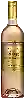
Château Fabre CordonPrintemps d’Amandine Corbières Rosé
 Pink wine
In the mouth this pink wine is a with a nice freshness.
This wine generally goes well with vegetarian, appetizers and snacks or lean fish.
Taste structure of the Printemps d’Amandine Corbières Rosé from the Château Fabre Cordon
Light | Bold | |
Dry | Sweet | |
Soft | Acidic |
In the mouth the Printemps d’Amandine Corbières Rosé of Château Fabre Cordon in the region of Languedoc-Roussillon is a with a nice freshness.
Food and wine pairings with Printemps d’Amandine Corbières Rosé
Pairings that work perfectly with Printemps d’Amandine Corbières Rosé



Original food and wine pairings with Printemps d’Amandine Corbières Rosé


The Printemps d’Amandine Corbières Rosé of Château Fabre Cordon matches generally quite well with dishes of pasta, vegetarian or appetizers and snacks such as recipes of spaghetti with beef balls, nanie's diced ham quiche or radicchio and pancetta rolls.
Details and technical informations about Château Fabre Cordon's Printemps d’Amandine Corbières Rosé.
Discover the grape variety: Mourvèdre
Mourvèdre noir is a grape variety originating from Spain. It produces a variety of grape specially used for wine making. It is rare to find this grape to eat on our tables. This variety of grape is characterized by medium to large bunches, and grapes of medium size. Mourvèdre noir can be found in several vineyards: South-West, Cognac, Bordeaux, Provence & Corsica, Rhône valley, Languedoc & Roussillon, Loire valley, Savoie & Bugey, Beaujolais.
Informations about the Château Fabre Cordon
The Château Fabre Cordon is one of of the world's greatest estates. It offers 11 wines for sale in the of Corbières to come and discover on site or to buy online.

The wine region of Corbières
Corbières is an important appellation in the Languedoc-roussillon">Languedoc-Roussillon region of southern France. It is one of the best known and most productive appellations in the Languedoc. The Corbières vineyards produce large quantities of red and rosé wines, as well as a growing number of white wines. The reds are the strongest Part of the appellation; they are reputedly Rich and herbal, made from Grenache, Syrah, Mourvèdre, Lledoner Pelut and Carignan.
The wine region of Languedoc-Roussillon
Languedoc (formerly Coteaux du Languedoc) is a key appellation used in the Languedoc-Roussillon wine region of southern France. It covers Dry table wines of all three colors (red, white and rosé) from the entire region, but leaves Sweet and Sparkling wines to other more specialized appellations. About 75% of all Languedoc wines are red, with the remaining 25% split roughly down the middle between whites and rosés. The appellation covers most of the Languedoc region and almost a third of all the vineyards in France.
The word of the wine: Rafle (taste of)
A taste considered a defect, characterized by an unpleasant astringency and bitterness, brought by the stalk during the vinification process. In order to avoid it, destemming before vinification is a common practice.